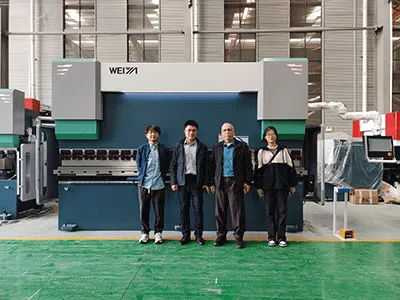
A CNC laser cutting machine is a computer-controlled system that uses a high-energy laser beam to cut or engrave materials with exceptional precision and consistency. It plays a critical role in modern manufacturing by enabling efficient, automated processing of a wide range of materials.
What Is a CNC Laser Cutting Machine and How Does It Work?
A CNC laser cutting machine operates by directing a focused laser beam along programmed paths to melt, burn, or vaporize material, producing highly accurate cuts. CNC, or Computer Numerical Control, means that the movement of the cutting head is governed by digital instructions generated from CAD designs.
During operation, the laser beam is concentrated through optical components into a very small spot, creating enough energy density to process metals, plastics, and other materials. Assist gases such as oxygen, nitrogen, or compressed air are used to remove molten material from the cutting area and influence cutting speed and edge quality.
In a typical workflow, the operator imports a design file, arranges parts efficiently on the material, and selects parameters such as material type and thickness. The machine then automatically adjusts cutting speed, power, and gas settings. Because the process is non-contact, there is no physical tool touching the workpiece, which reduces wear and minimizes mechanical deformation. Advanced systems from WEIYA integrate intelligent nesting and high-speed motion control to improve material utilization and overall production efficiency.
Key Components of a CNC Laser Cutting System
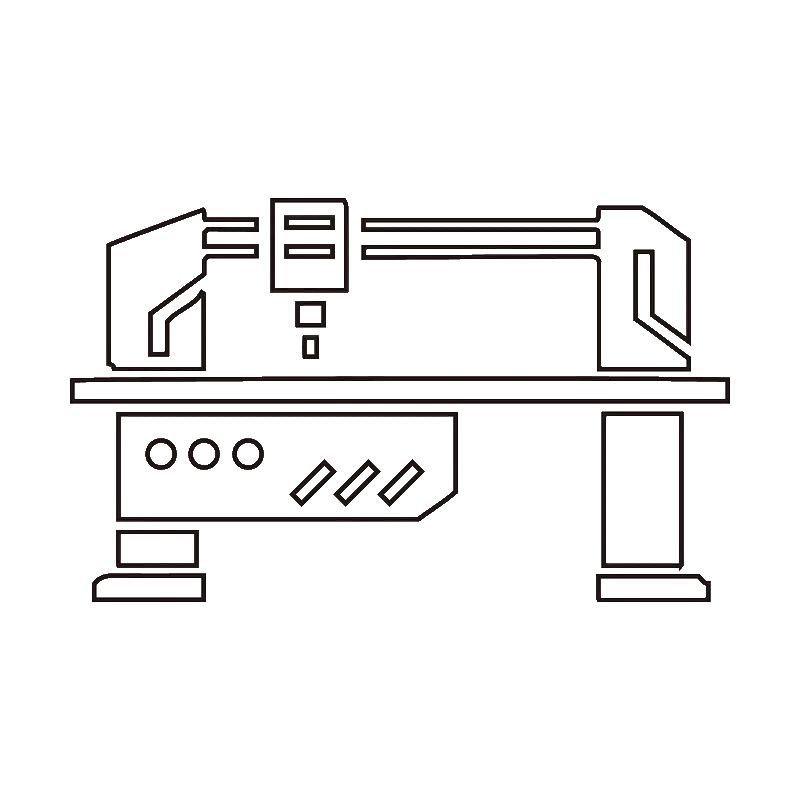
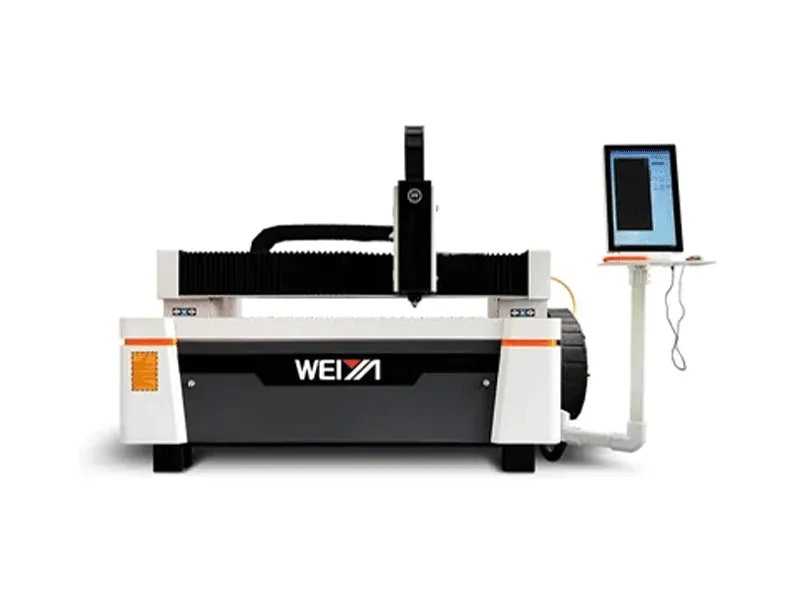
A CNC laser cutting machine consists of several integrated components that work together to deliver precise and repeatable results. The laser source generates the cutting beam, with fiber lasers commonly used for metal applications due to their high efficiency and strong beam quality.
The CNC controller acts as the system’s control center, interpreting program instructions and coordinating movement, laser output, and gas flow. The cutting head contains the optical elements that focus the beam and a nozzle that directs assist gas into the cutting zone.
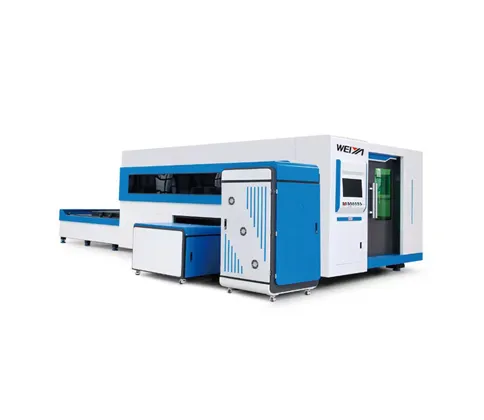
The motion system, driven by precision motors and guides, moves the cutting head across the workpiece at high speed while maintaining accuracy. The worktable supports the material, often featuring exchange systems for continuous production. Supporting systems such as gas supply units and fume extraction ensure stable cutting conditions and a safe working environment.
WEIYA integrates these components into optimized machine designs that enhance reliability, cutting performance, and ease of operation for industrial users.
Common Materials a CNC Laser Cutter Can Process
CNC laser cutting machines are capable of processing a wide variety of materials when the correct laser type and power settings are applied. Fiber laser systems are widely used for cutting metals such as stainless steel, carbon steel, aluminum, brass, and copper across a range of thicknesses depending on machine power.
For non-metal materials, CO₂ and other laser types are commonly used to cut or engrave acrylic, wood, paper, textiles, and certain composites. However, material compatibility must always be verified, as some plastics can release harmful fumes during processing, and reflective metals require appropriate configurations to ensure safe and effective cutting.
These capabilities make CNC laser cutting suitable for applications such as sheet metal fabrication, enclosures, decorative panels, automotive components, and electronic housings.
Benefits of Using CNC Laser Cutting in Modern Manufacturing
CNC laser cutting offers significant advantages in terms of precision, flexibility, and efficiency. Modern systems can achieve high positioning accuracy and consistent repeatability, making them suitable for demanding fabrication tasks.
Because the laser beam is narrow and does not physically contact the material, it produces clean cuts with minimal waste and reduced need for secondary finishing. Efficient nesting of parts on a sheet further improves material utilization, contributing to lower production costs.
The ability to switch between designs quickly without changing tooling supports rapid prototyping and flexible manufacturing. As a result, CNC laser cutting aligns well with current industry trends such as customization, short production cycles, and digital manufacturing workflows. For manufacturers working with WEIYA, these advantages translate into improved productivity, faster turnaround times, and competitive pricing.
CNC Laser Cutting Machine vs Traditional Cutting Methods
CNC laser cutting differs from traditional cutting methods by using focused thermal energy rather than mechanical force. Conventional processes such as shearing, punching, or sawing involve physical contact with the material, which can introduce mechanical stress, larger burrs, and wider cutting gaps.
Laser cutting produces a narrower kerf and a smaller heat-affected zone, resulting in cleaner edges and higher precision. It also eliminates the need for dedicated tooling, allowing manufacturers to switch between different designs quickly by simply updating the program.
While traditional methods may still be more cost-effective for very high-volume production of simple parts, CNC laser cutting is often the better choice for complex geometries, variable production runs, and applications requiring high accuracy.
When Does a CNC Laser Cutting Machine Make Business Sense?
Investing in a CNC laser cutting machine is most beneficial when a manufacturer requires flexible, precise cutting and can maintain consistent machine utilization. Although the initial investment can be significant depending on machine size, power, and automation level, the long-term benefits often include lower per-part costs and reduced reliance on outsourcing.
For operations running multiple shifts and optimizing material usage, in-house laser cutting can significantly improve efficiency and shorten production cycles. As global demand for laser processing continues to grow, many manufacturers are adopting this technology to enhance competitiveness and respond quickly to changing customer requirements.
With extensive experience in CNC machinery, WEIYA supports customers in selecting the right machine configuration and implementing efficient production strategies, helping reduce risk and accelerate return on investment.
Conclusion
A CNC laser cutting machine is a versatile and precise solution for modern manufacturing, offering clean cuts, high repeatability, and the flexibility to handle a wide range of materials. Compared with traditional methods, it reduces tooling requirements, shortens setup times, and improves material efficiency.
As manufacturing continues to evolve toward more digital and flexible production models, CNC laser cutting has become an essential capability for many businesses. With advanced solutions from WEIYA, manufacturers can enhance productivity, maintain high quality standards, and stay competitive in rapidly changing markets.