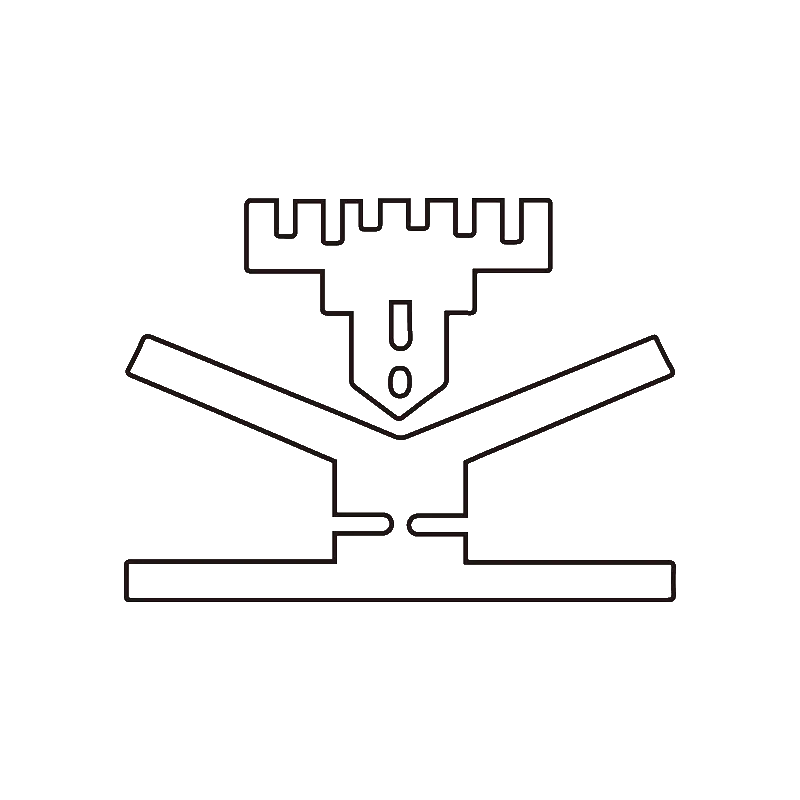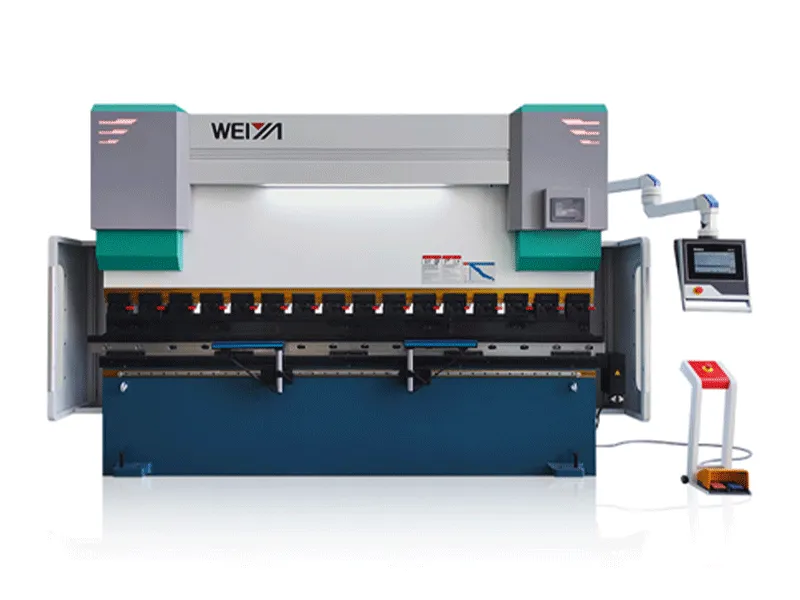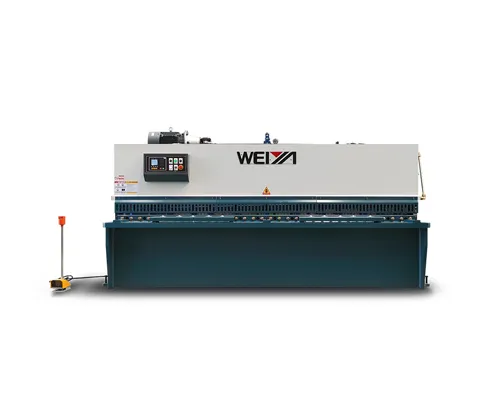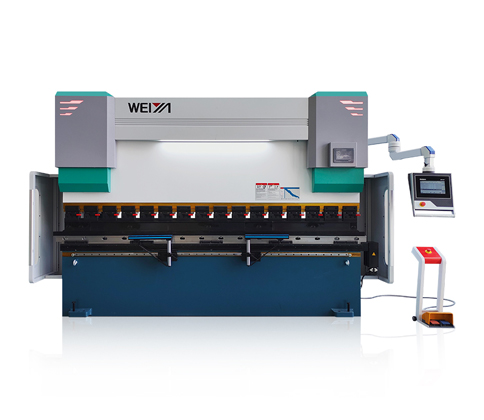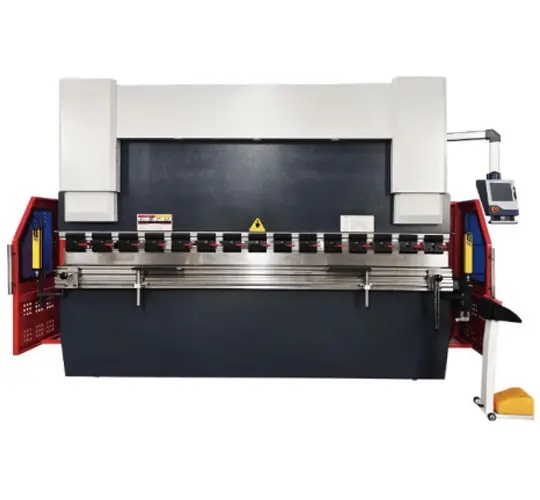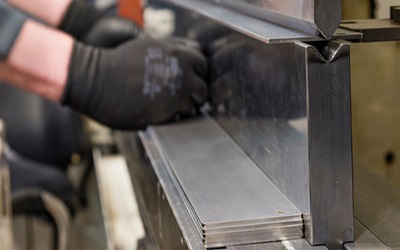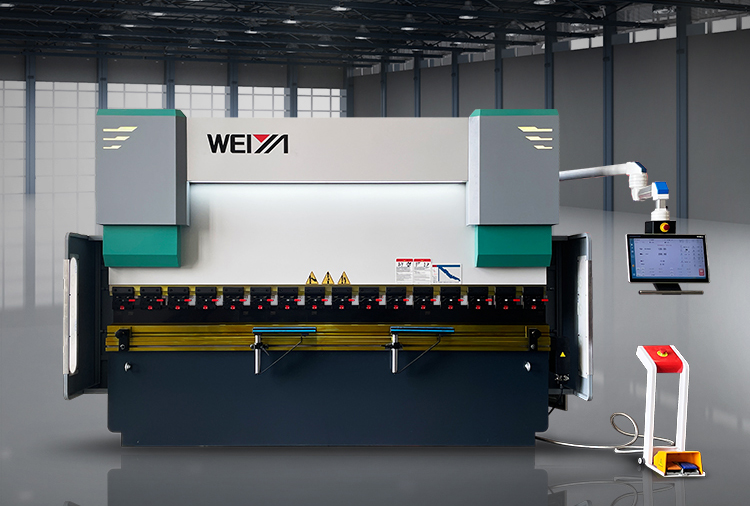
Press Brake form sheet metal by pressing a punch into a die, but air bending and bottoming differ fundamentally in how the material interacts with the tooling. Air bending applies just enough force to achieve the desired angle while leaving a gap between the sheet and the bottom of the V-die, making it fast and versatile for most production work. Bottoming (coining) drives the punch fully into the die so the material conforms exactly to the tooling geometry, delivering superior angle accuracy at the expense of higher tonnage and tooling stress. These methods cover the majority of bending applications, with the choice depending on material, tolerance needs, and production volume. WEIYA Machinery supports both through CNC controls in models like the Smart CNC, Elite, and Genius Press Brake.
-bending.png "/uploads/image/2026/04/01/air-bending-and-bottoming-(coining)-bending.png")
Air Bending: Principles, Advantages, and Applications
Air bending works by controlling punch depth to set the bend angle—the shallower the penetration, the larger the included angle. This approach requires less force (typically 50-60% of bottoming tonnage for the same bend) and the same punch/die set can produce angles from ~90° up to nearly 180° by varying depth. Tooling experiences minimal wear because contact pressure is distributed across a smaller area, and springback is managed through CNC angle compensation or material-specific programming.
The advantages make air bending the workhorse of fabrication: setup flexibility, lower cycle times, reduced tooling costs, and broad material compatibility from mild steel to aluminum. It's ideal for brackets, enclosures, frames, HVAC components, and automotive panels where ±1° tolerances suffice. WEIYA models like the Smart CNC and Elite integrate back-gauge positioning, real-time angle sensing, and hybrid servo drives to maximize air bending efficiency while minimizing energy use.
Bottoming (Coining) Bending: Mechanics, Advantages, and Applications
Bottoming fully seats the workpiece against the die walls and bottom, so the final angle is primarily determined by tooling geometry rather than punch depth. Coining takes this further with extreme tonnage (often 5-10x air bending force) to imprint the exact punch/die profile into the material, virtually eliminating springback through work hardening. This produces extremely consistent angles (±0.5° or better) across batches, even with high-strength steels or thick sheets.
Bottoming shines in applications demanding tight tolerances, such as aerospace fittings, medical device housings, precision tooling, and structural components where fit-up is critical. The trade-offs include higher tooling wear, longer cycle times, greater machine stress, and the need for dedicated tooling per angle. WEIYA machines handle these demands with robust frames, crowning systems, and advanced hydraulic/servo controls in models like the Genius Press Brake and EP Full Electric.
Key Differences and Selection Guide
| Aspect | Air Bending | Bottoming/Coining |
|---|
| Force Required | Lower (50-60% of bottoming) | Higher (up to 10x for coining) |
| Angle Control | Punch depth | Tooling geometry |
| Tolerance | ±1° typical | ±0.5° or tighter |
| Springback | Moderate (CNC compensates) | Minimal |
| Tooling Wear | Low | High |
| Cycle Time | Faster | Slower |
| Best For | General fabrication, high volume | Precision parts, thick/high-strength material |
Conclusion
Air bending dominates everyday production for its speed and economy, while bottoming/coining ensures precision when tolerances are tight and consistency is non-negotiable. Many modern shops use both methods strategically on the same CNC press brake, switching via programming and tooling. WEIYA Machinery enables this versatility across their lineup—from the efficient Smart CNC for air bending to heavy-duty Giant Press Brake for demanding bottoming—equipped with safety features, energy-efficient drives, and Industry 4.0 connectivity to optimize either technique for your specific fabrication needs.