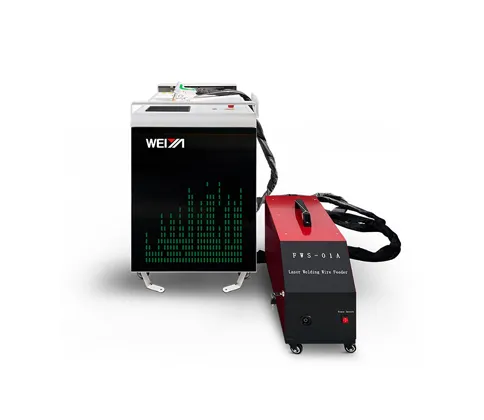
Yes, laser cutters can engrave stainless steel effectively when the appropriate laser technology, power level, and parameter settings are used. For applications requiring high contrast, precision, and consistent engraving depth, fiber lasers are widely recognized as the preferred solution. In contrast, CO₂ lasers are generally limited to marking coated or treated stainless steel surfaces rather than engraving the raw material directly. As a CNC and laser solutions provider, WEIYA supports users in selecting and configuring machines that can reliably engrave stainless steel components such as tags, tools, plates, and nameplates for both industrial and customized applications.
Can Laser Cutters Engrave Stainless Steel Effectively?
Laser engraving on stainless steel involves using a focused laser beam to permanently alter or remove material from the surface, creating precise and durable markings such as text, logos, or codes. Modern fiber laser systems are particularly effective because stainless steel efficiently absorbs their short wavelength, enabling fast processing speeds and excellent contrast. Typical fiber laser systems used for metal engraving operate within a power range of approximately 20 W to 100 W, with most surface engraving tasks easily handled by machines in the 20–50 W range. On the other hand, CO₂ lasers operate at a longer wavelength that is poorly absorbed by bare metals. As a result, they are not suitable for direct engraving on untreated stainless steel but can be used to remove coatings, paints, or marking sprays applied to the surface.
When applications require permanent engraving directly into stainless steel, such as serial numbers or durable identification plates, fiber lasers or other solid-state laser sources are necessary to achieve reliable results.
Where Stainless Steel Laser Engraving Excels
Stainless steel laser engraving is widely used in industries that require permanent and durable markings. It is commonly applied to machine parts, industrial tools, and identification tags where long-term readability is essential. In addition, it is popular for branding and personalization, including engraved knives, drinkware, watches, and jewelry. The technology is also highly effective for traceability applications, such as QR codes, barcodes, and data matrix codes, where precision and durability are critical.
Using the correct laser type and settings directly impacts the clarity, corrosion resistance, and longevity of the engraved marks, making proper configuration essential for professional results.
Best Laser Technologies for Stainless Steel Engraving
The most effective technologies for stainless steel engraving are fiber lasers and other short-wavelength laser sources specifically designed for metal processing. These systems deliver energy that is efficiently absorbed by stainless steel, allowing precise heating and controlled material removal.
Fiber lasers are the primary choice for stainless steel engraving due to their wavelength of approximately 1064 nm, which enables direct interaction with metal surfaces. They typically operate in the 20–50 W range for standard engraving, while higher power systems up to 100 W are used for deeper or faster processing. These machines can achieve high engraving speeds and are suitable for a wide range of metals, including stainless steel, aluminum, brass, and titanium. Their ability to produce both surface markings and deep engravings with fine detail makes them highly versatile.
In contrast, CO₂ lasers, with a wavelength of 10.6 μm, are not effective for direct engraving on bare stainless steel because of low absorption. They are primarily used for removing coatings or marking layers on metal surfaces. While CO₂ systems are well-suited for materials such as wood, acrylic, leather, and plastics, they are not ideal for direct stainless steel engraving.
Advanced options such as MOPA fiber lasers provide additional flexibility by allowing precise control over pulse duration and frequency. This enables color marking and enhanced contrast on stainless steel surfaces. UV lasers are sometimes used for delicate marking applications, but for most industrial engraving needs on stainless steel, standard or MOPA fiber lasers remain the preferred choice. WEIYA typically recommends fiber laser configurations tailored to part size, production volume, and required engraving depth.
How Deep Can a Laser Engrave Stainless Steel?
The depth of laser engraving on stainless steel can vary significantly depending on the application and machine settings. Surface marking typically involves only a few microns of depth, while standard engraving ranges from around 10 to 200 microns. For deeper engraving, depths of up to approximately 0.5 mm can be achieved with standard fiber laser systems, and even greater depths are possible with high-power systems using multiple passes.
However, deeper engraving must be carefully controlled because excessive material removal can affect the corrosion resistance of stainless steel. The material relies on a protective oxide layer to prevent rust, and removing too much material can compromise this protection in the engraved area.
The final engraving depth depends on several factors, including laser power, scanning speed, pulse settings, and the number of passes. Increasing power and the number of passes generally increases depth but also raises processing time and heat input.
Settings That Improve Stainless Steel Laser Engraving Results
Achieving optimal engraving results on stainless steel requires balancing key parameters such as power, speed, frequency, and focus. Proper adjustment ensures the desired depth and contrast without causing overheating or distortion.
Higher power levels are typically used for deeper engraving, often approaching the maximum output of the machine. Slower scanning speeds allow more energy to be delivered to the surface, increasing engraving depth. Frequency settings influence how energy is distributed, with lower frequencies often used for deeper cuts and higher frequencies for smoother or color-based markings. Multiple passes are commonly required for deep engraving, gradually removing material layer by layer.
Maintaining accurate focus is critical to ensure maximum energy density at the work surface. In some cases, adjusting the focal position during multi-pass engraving helps maintain consistent results. Resolution settings, such as DPI or line spacing, also affect the final appearance, with higher resolutions producing finer detail at the cost of longer processing times.
WEIYA can assist users by pre-configuring parameter settings for common stainless steel grades and refining them during machine setup to ensure optimal performance.
Common Challenges in Laser Engraving Stainless Steel
Several challenges can arise during stainless steel engraving, including inconsistent contrast, excessive heat buildup, and potential corrosion issues. Because stainless steel is relatively hard and relies on a protective surface layer, improper settings can lead to rough edges, discoloration, or reduced corrosion resistance.
Low contrast engraving is often caused by insufficient energy input and can be improved by increasing power, reducing speed, or adjusting frequency. Excessive heat or discoloration may require lowering power or increasing speed to reduce thermal impact. Uneven engraving depth can result from poor focus or uneven surfaces, making stable fixturing and consistent setup essential.
To minimize corrosion risks, it is important to avoid unnecessarily deep engraving and to clean or treat the engraved surface after processing. Removing debris and residue through air assist or post-processing can also improve the final appearance and quality.
Fiber vs CO₂ Laser for Stainless Steel Engraving
Fiber lasers are significantly more effective than CO₂ lasers for engraving stainless steel because their shorter wavelength is efficiently absorbed by metal surfaces. This allows for faster processing speeds, deeper engraving capability, and higher-quality results.
CO₂ lasers, by comparison, are limited to marking coatings or treated surfaces rather than engraving the metal itself. While they remain useful for non-metal materials, they are not suitable for direct stainless steel engraving.
For applications where stainless steel engraving is a primary requirement, fiber lasers are the recommended choice. CO₂ systems can be added later if there is also a need to process materials such as wood, acrylic, or plastics.
How WEIYA Supports Stainless Steel Laser Engraving
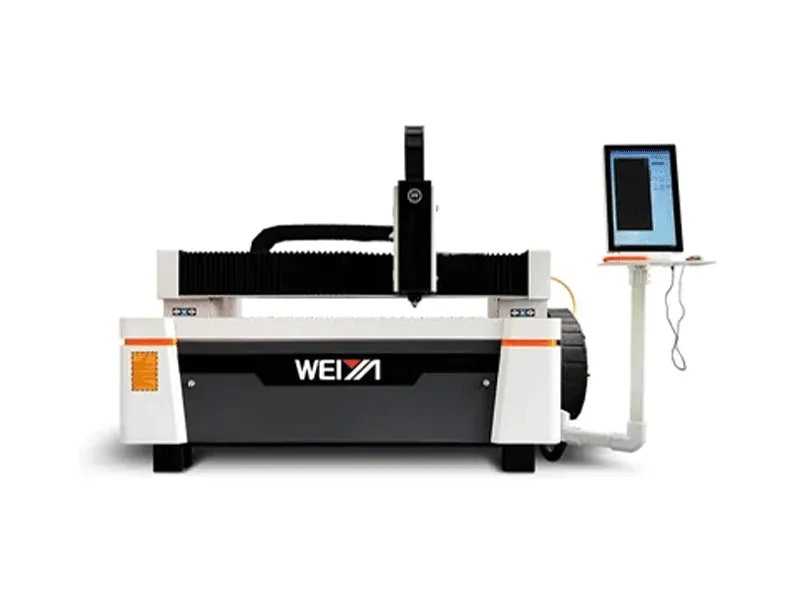
WEIYA provides integrated laser solutions that include fiber laser systems designed specifically for metal engraving. These solutions typically involve application testing, parameter optimization, and machine configuration to match specific stainless steel applications. Users can submit sample parts for testing and receive recommended settings along with validated engraving results. This approach helps ensure that the selected system is properly optimized before deployment, reducing setup time and improving production consistency.
Conclusion
Laser cutters and engravers can successfully engrave stainless steel when equipped with the appropriate technology, particularly fiber lasers, and properly optimized settings. With the right configuration, engraving depths can range from very fine surface markings to deeper, highly durable engravings suitable for industrial and commercial use.
For users seeking guidance on selecting equipment or optimizing engraving performance, WEIYA can provide tailored recommendations, sample testing, and technical support to ensure reliable and high-quality results.