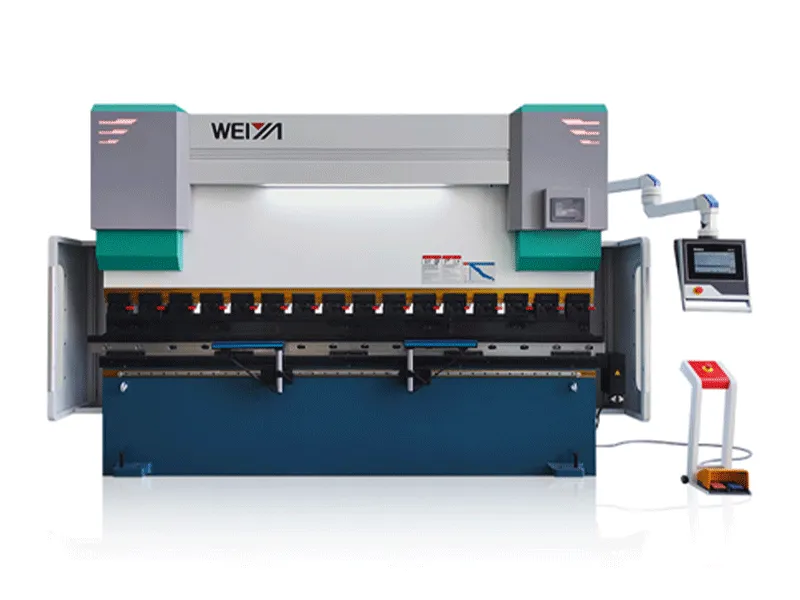
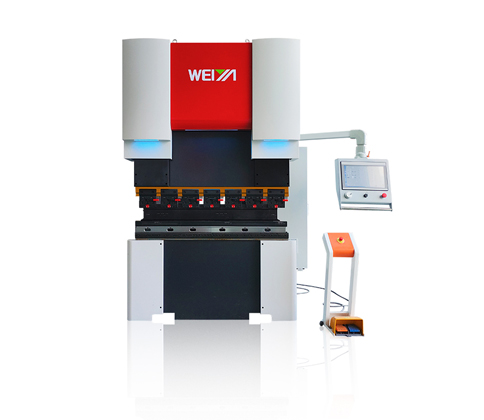
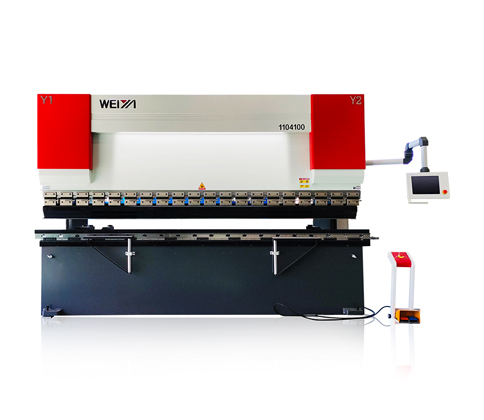
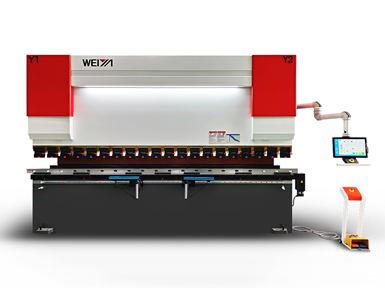
Press brake bending machines are essential equipment in sheet metal fabrication, transforming flat stock into structural components, enclosures, brackets, and assemblies. Since their development in the early 20th century, they have evolved from basic mechanical designs to sophisticated CNC-controlled systems that deliver high accuracy and repeatability. These machines serve industries ranging from automotive and aerospace to construction and appliances, where consistent part quality directly impacts assembly fit and performance. Manufacturers like WEIYA Machinery offer models such as Smart CNC, Elite CNC, EP Full Electric, and Giant Press Brake, each optimized for different production scales and material demands while incorporating modern automation features.
Key Components and Design of a Standard Press Brake
The core structure of a press brake centers on a rigid frame, a vertically moving ram, and interchangeable tooling. The C-shaped or straight-sided frame absorbs the bending forces—often hundreds of tons—while maintaining alignment to prevent deflection that could distort bend angles. The ram carries the upper tool (punch) and drives it downward into the lower tool (die) mounted on the bed. Hydraulic cylinders, servo motors, or mechanical linkages power the ram, with back gauges positioning the sheet accurately for each bend. WEIYA Machinery integrates safety elements like laser guards and wireless foot pedals into models such as the EP Full Electric and Giant Press Brake, ensuring compliance with modern standards while prioritizing operator protection and machine longevity through German-engineered precision.
How a Press Brake Works: The Bending Process Explained
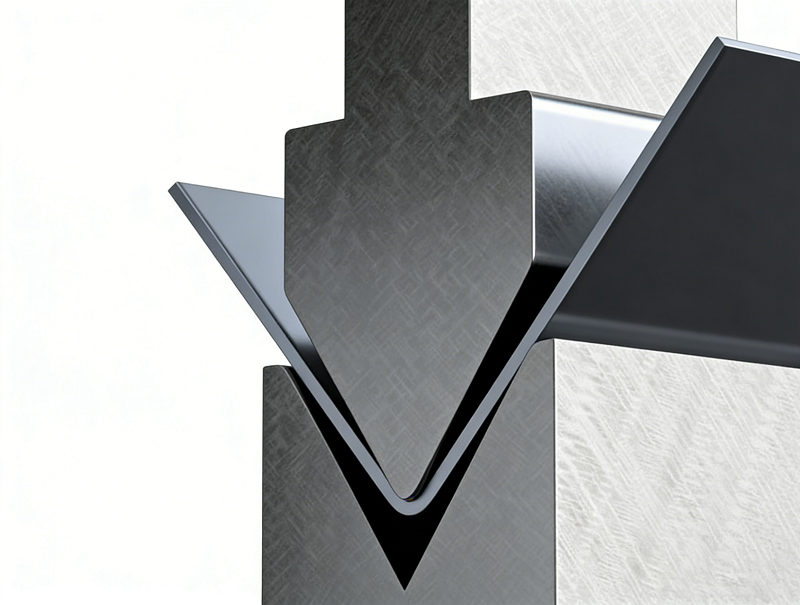
Operation begins with loading a sheet against the programmable back gauge, which locates it precisely for the first bend. The CNC controller executes the programmed sequence: the ram descends at a controlled speed, presses the punch into the die opening to form the metal plastically, then retracts to clear the workpiece. Air bending leaves a gap under the sheet for flexibility in angles, while bottoming or coining fully seats the material for tighter tolerances. Advanced CNC systems—like those in WEIYA machines—monitor ram position, pressure, and angle in real time, automatically compensating for material springback or machine deflection. This closed-loop control minimizes errors, supports complex multi-bend parts, and integrates with Industry 4.0 for data tracking and predictive maintenance.
Types of Press Brakes
Mechanical Press Brakes
Mechanical press brakes use a flywheel, clutch, and crankshaft to deliver fast, repetitive strokes via gears and linkages. They excel in high-speed production of simple bends but offer limited control over stroke depth, speed, or angle, making them less suitable for varied or precision work. While durable for certain applications, their fixed stroke nature and higher maintenance needs have largely given way to more versatile alternatives in modern shops.
Hydraulic Press Brakes
Hydraulic press brakes dominate current manufacturing due to their smooth, controllable ram motion powered by fluid pressure in cylinders. They handle thicker materials and deeper bends with adjustable tonnage and stroke, providing uniform force distribution across the bend length. WEIYA Machinery enhances hydraulic models with hybrid servo systems for energy efficiency, reducing power draw during idle or return strokes without sacrificing force. This combination offers reliability, precision via CNC integration, and adaptability for heavy-duty tasks like structural fabrication.
Conclusion
Press brake bending machines combine mechanical power, precise tooling, and digital control to enable efficient, high-quality sheet metal forming across diverse applications. From mechanical speedsters to advanced hydraulic CNC systems, they address varying production needs while advancing toward sustainability and automation. WEIYA Machinery leads with innovative models like the Smart CNC, Elite CNC, and Giant Press Brake, delivering the performance, safety, and flexibility required to meet modern fabrication challenges.