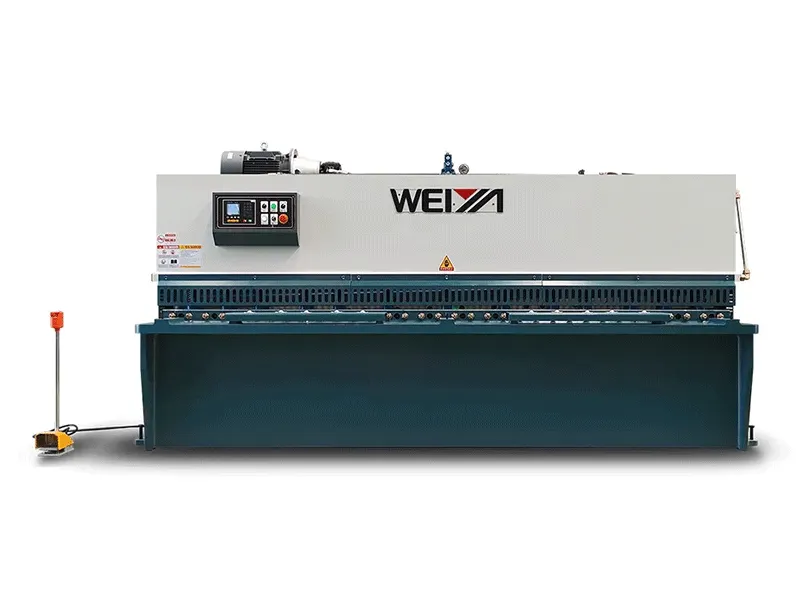
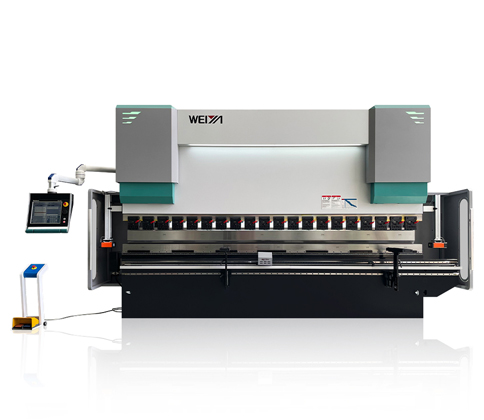
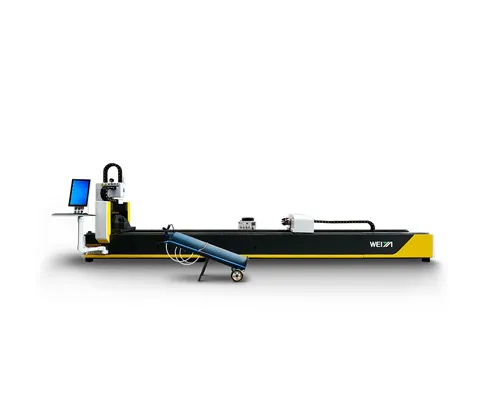
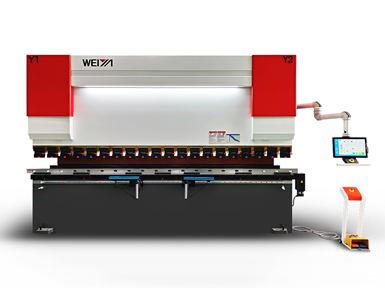
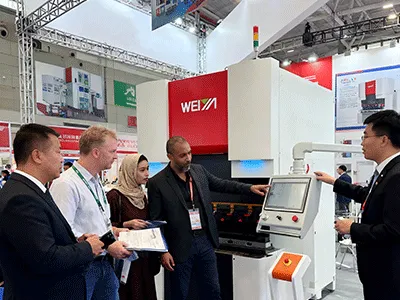
CNC press brakes bring computer numerical control into the bending process so that angles, positions, and sequences are executed automatically rather than by manual adjustment. Operators load a program instead of setting each bend by hand, which allows the machine to produce complex parts with consistent accuracy over large batches. This level of control is especially important in sectors like aerospace and automotive, where tight tolerances and repeatability are essential. Manufacturers such as WEIYA Machinery design CNC press brakes to integrate with “Industry 4.0” environments, enabling connectivity and data-driven production.
The Core Components of a CNC Press Brake System
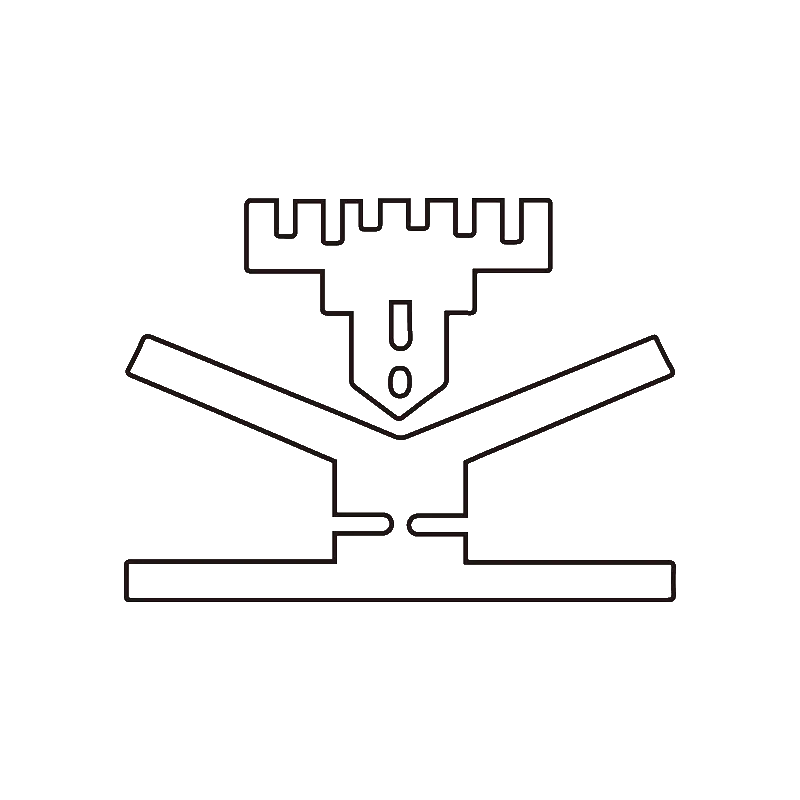
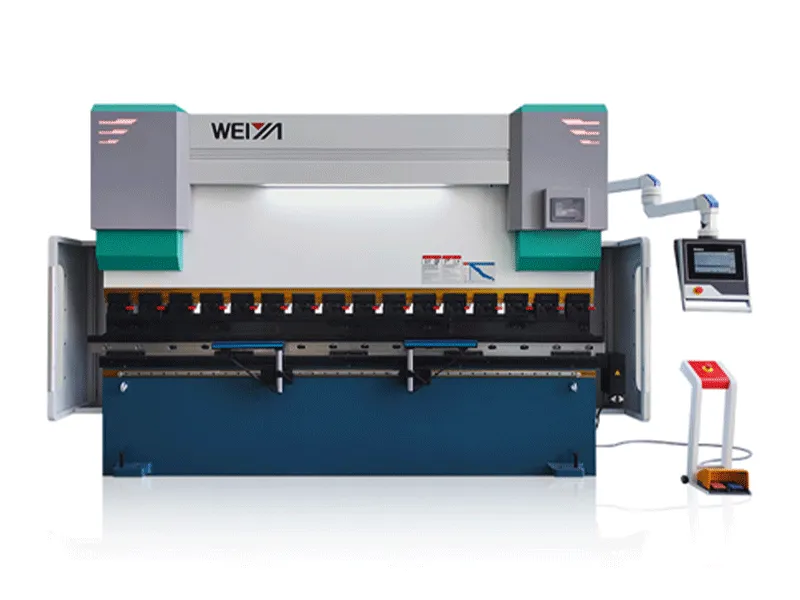
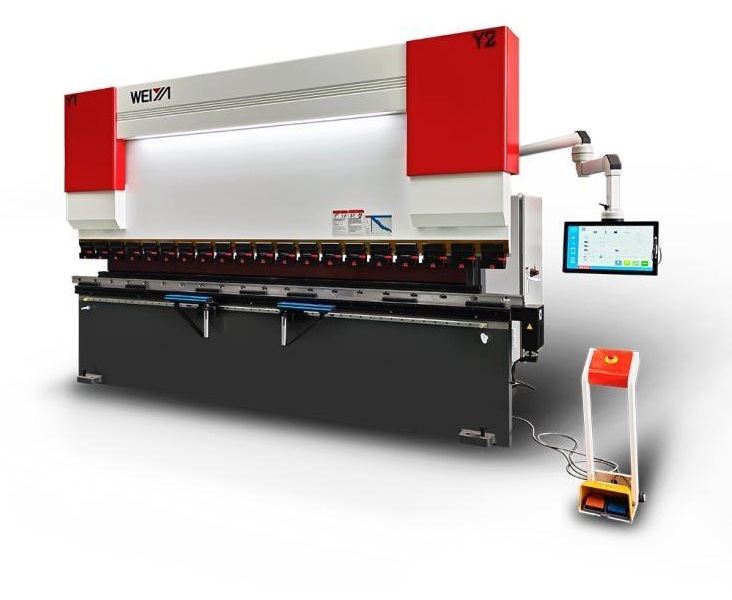
A CNC press brake is built around a rigid frame, a moving ram, the tooling, and an electronic control system. The frame provides the stiffness needed to resist deformation under high bending forces so that parts remain accurate along their entire length. The ram travels vertically and carries the upper tooling (the punch), which presses the sheet metal into the lower tooling (the die) mounted on the bed. The control system links motors, hydraulics or servos, and feedback devices so the ram and back gauge move to exact positions. WEIYA Machinery emphasizes robust mechanical design combined with engineered control systems to ensure reliable performance in demanding production environments.
Programming and Setup: Guiding the CNC Bending Process
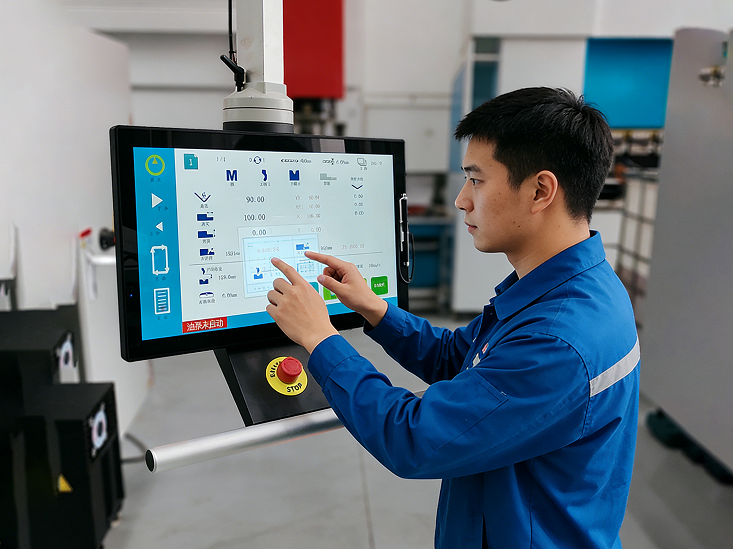
Before bending begins, the operator programs the machine with parameters such as material, thickness, bend length, angle, and sequence. This is done through a graphical or menu-based interface, often with 2D or 3D part simulation that shows the bend order and detects potential collisions. The program also defines back gauge positions to locate the sheet correctly for each bend. Features like back gauge adjustment and automatic angle correction help the machine maintain accuracy even when material properties vary slightly. WEIYA focuses on intuitive interfaces so that shops of different sizes can adopt CNC bending without needing highly specialized programming expertise.
Understanding Material Flow and Bending Cycles in CNC
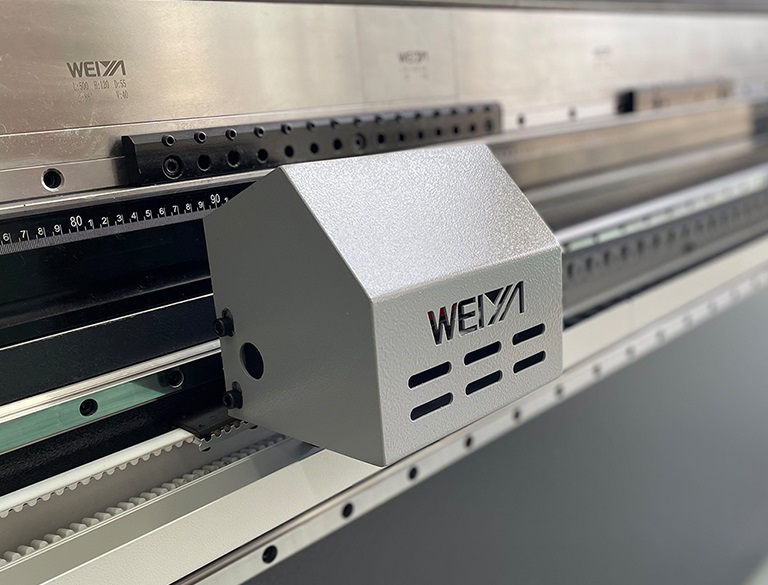
In a typical CNC bending cycle, the operator positions the sheet against the back gauge fingers, then initiates the program so the ram moves down, performs the bend, and retracts to a safe height. The back gauge then repositions for the next bend, and the process repeats until the full part geometry is formed. Smooth material flow—how the sheet is handled, rotated, and supported between bends—is critical to avoid scratches, misalignment, or deformation. CNC control manages ram speed, approach, bending, and return phases, as well as pressure or tonnage, so that bends are formed without overloading the material or the machine. Designs from WEIYA Machinery often incorporate supports and optimized motion profiles to keep the process efficient and consistent.
Advantages of CNC Press Brakes: Efficiency and Repeatability
CNC press brakes offer clear gains in efficiency because they reduce setup time and allow quick changeovers between different parts by simply loading a new program. Repeatability is another major advantage: once a part is dialed in, the same program can reliably reproduce it across large production runs with minimal adjustment. This reduces scrap, rework, and operator fatigue. As lead times shrink and part complexity increases, reliable CNC systems—such as those provided by WEIYA Machinery—help manufacturers stay competitive by combining speed, accuracy, and flexible automation.
A CNC press brake automates the bending of sheet metal by coordinating a rigid mechanical structure, precise motion control, and programmable logic into a single system. By understanding its components, programming workflow, and bending cycle, manufacturers can fully leverage its capabilities. Choosing an experienced builder like WEIYA Machinery gives access not only to advanced equipment but also to the application support needed to integrate CNC bending successfully into modern fabrication lines.