Email Us
en

Pressbrake: The Backbone of Metal Bending in Modern Manufacturing

Table of Content [Hide]

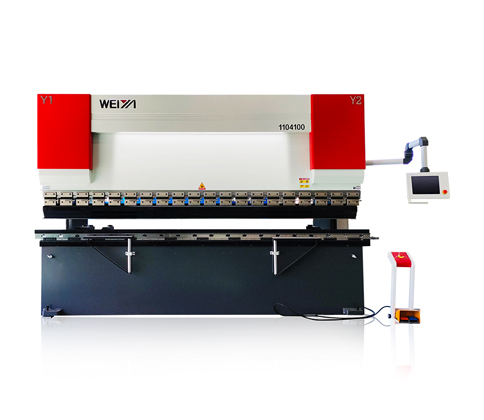
    In the realm of metal fabrication, the pressbrake stands as an indispensable machine, designed specifically for bending and forming metal sheets into precise, functional shapes—from simple brackets and enclosures to complex aerospace components. Also known as a bending machine, a pressbrake uses controlled force to press metal against a die, transforming flat metal stock into angled, curved, or folded parts that form the building blocks of industries ranging from automotive to construction. This article explores the pressbrake’s working principle, types, key components, selection criteria, safety protocols, and real-world applications, highlighting its role as a cornerstone of modern manufacturing.


    1. How a Pressbrake Works: Core Principles of Metal Bending

    At its heart, a pressbrake operates on the principle of plastic deformation—applying sufficient force to a metal sheet to bend it beyond its elastic limit, ensuring the material retains the desired shape once the force is removed. The process involves three key elements: the machine’s moving upper beam (slider), a fixed lower die, and the metal workpiece. Here’s a step-by-step breakdown of its operation:

    1.Workpiece Positioning: The flat metal sheet is placed on the pressbrake’s lower 工作台 (table), aligned with guides or backgauges to ensure precise placement relative to the die. Backgauges—often CNC-controlled—automatically adjust the sheet’s position, guaranteeing consistent bending across multiple parts.

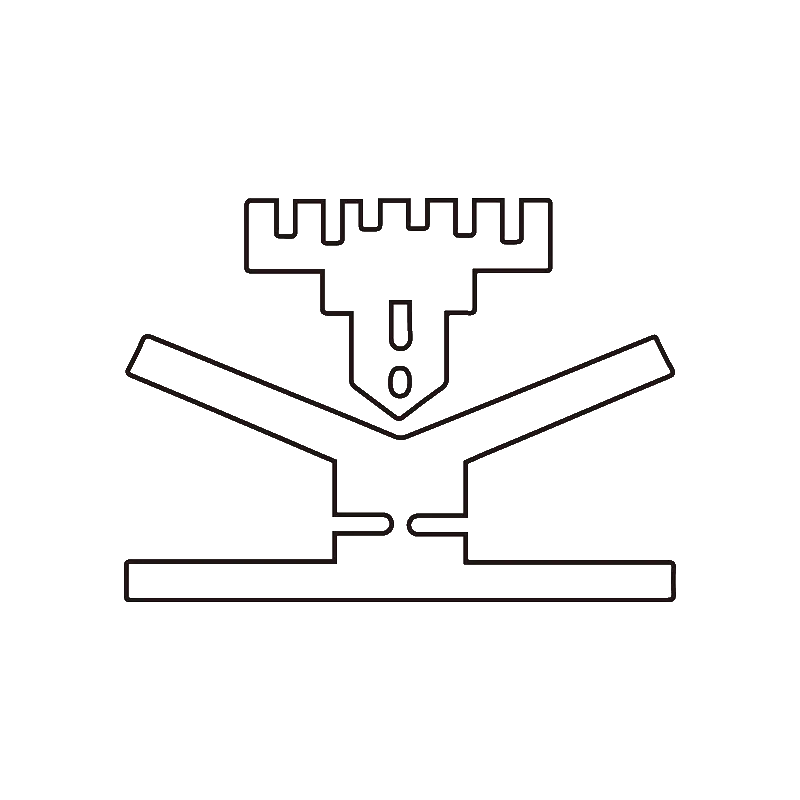
    2.Die Setup: A specialized die (typically V-shaped, though custom dies for unique angles or curves exist) is mounted on the lower table. The die’s V-opening (V-die) size is selected based on the metal’s thickness and material type (as discussed in prior contexts), a critical factor in avoiding material cracking or springback.

    3.Force Application: The upper slider (driven by mechanical, hydraulic, or electro-hydraulic systems) descends, pressing the metal sheet into the V-die. The force applied must be sufficient to overcome the metal’s yield strength—for example, thicker stainless steel requires more force than thin aluminum.

    4.Shape Formation: As the slider presses down, the metal bends along the die’s edges, forming the desired angle (e.g., 90°, 45°). The slider holds the position briefly to minimize springback—the tendency of metal to "bounce back" slightly after bending—with CNC systems often incorporating compensation algorithms to adjust the bend angle accordingly.

    5.Part Removal: Once the bend is complete, the slider retracts, and the finished part is removed from the die. For complex parts requiring multiple bends, the process repeats with the backgauge repositioning the sheet for subsequent folds.


    2. Types of Pressbrakes: Classifications by Drive System

    Pressbrakes are primarily categorized by their drive mechanism—the system that powers the upper slider’s movement. Each type offers distinct advantages in terms of force, precision, speed, and suitability for different applications:

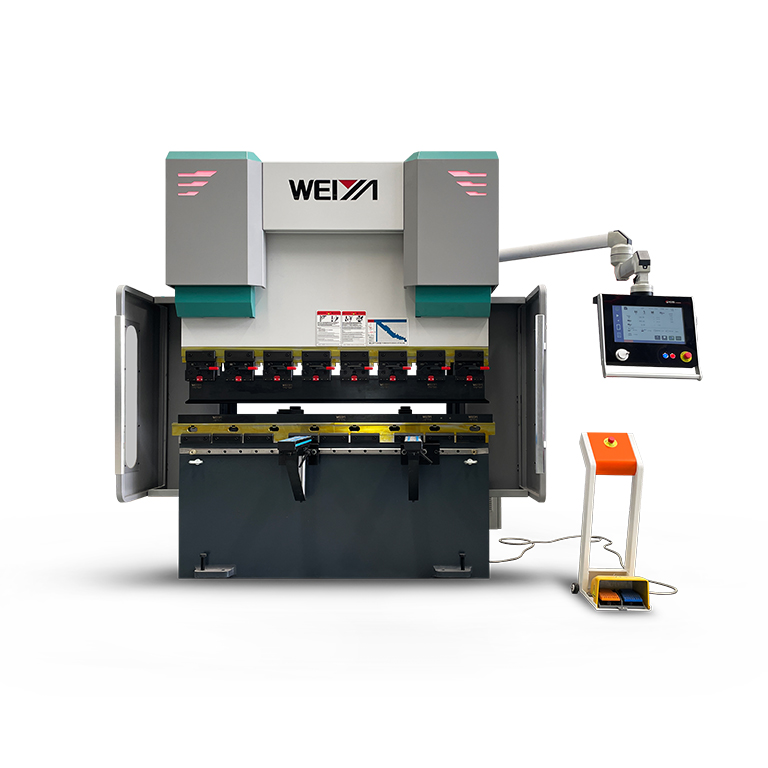
    2.1 Mechanical Pressbrakes

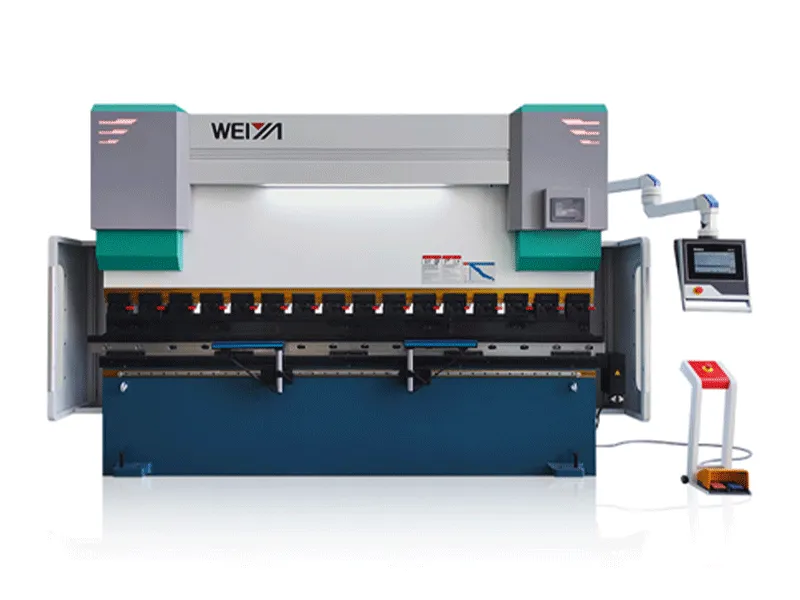
    Mechanical pressbrakes use a flywheel and crankshaft system to generate bending force. A motor spins the flywheel, which transfers energy to the crankshaft, converting rotational motion into linear downward movement of the slider.

    •Advantages:

    ◦High speed (fast slider cycling, ideal for high-volume production of simple parts).

    ◦Lower initial cost compared to hydraulic or electro-hydraulic models.

    ◦Consistent force delivery for thin to medium-gauge metals (≤6mm steel).

    •Limitations:

    ◦Fixed stroke length (less flexibility for parts requiring varying bend depths).

    ◦Limited force capacity (typically ≤100 tons, unsuitable for thick or high-strength metals).

    ◦Higher maintenance needs (flywheel and crankshaft components wear over time).

    •Applications: Low-volume to medium-volume production of simple parts (e.g., brackets, sheet metal enclosures, HVAC ducts).
    pressbrake-the-backbone-of-metal-bending-in-modern-manufacturing-1.webp

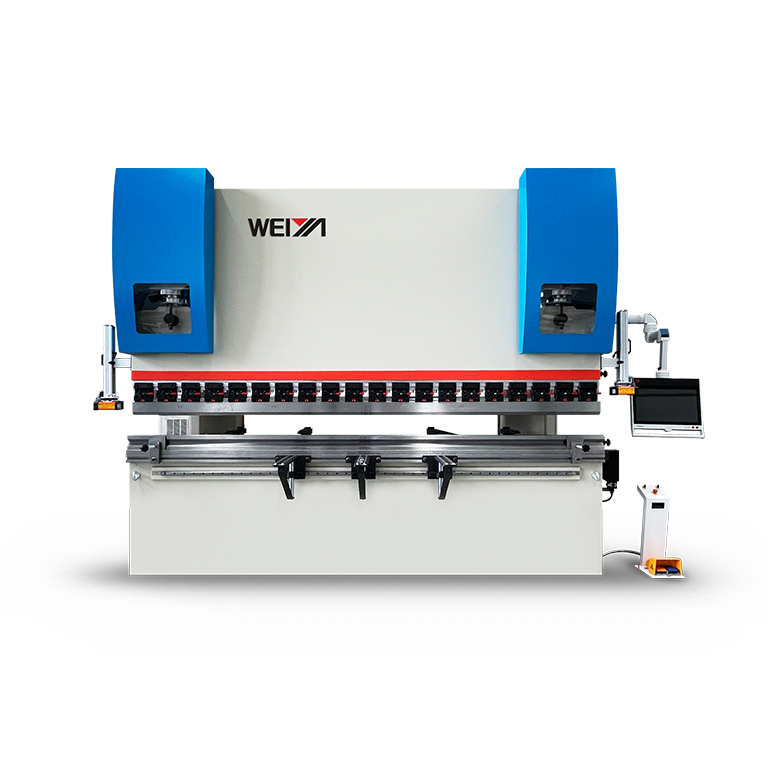
    2.2 Hydraulic Pressbrakes

    Hydraulic pressbrakes rely on hydraulic cylinders (usually two, one on each side of the slider) to drive the bending motion. Hydraulic fluid is pumped into the cylinders, creating pressure that pushes the slider downward with controlled force.

    •Advantages:

    ◦Variable force and stroke length (flexible for complex parts with multiple bends).

    ◦High force capacity (ranging from 50 tons to over 2,000 tons, suitable for thick metals like 20mm+ steel).

    ◦Smooth, precise movement (reduces material deformation and improves bend accuracy).

    •Limitations:

    ◦Slower cycling speed than mechanical models (better for precision over volume).

    ◦Susceptible to hydraulic fluid leaks (requires regular maintenance of hoses and seals).

    •Applications: Heavy-duty fabrication (e.g., structural steel components, thick aluminum plates for automotive chassis, industrial machinery parts).
    pressbrake-the-backbone-of-metal-bending-in-modern-manufacturing-2.webp


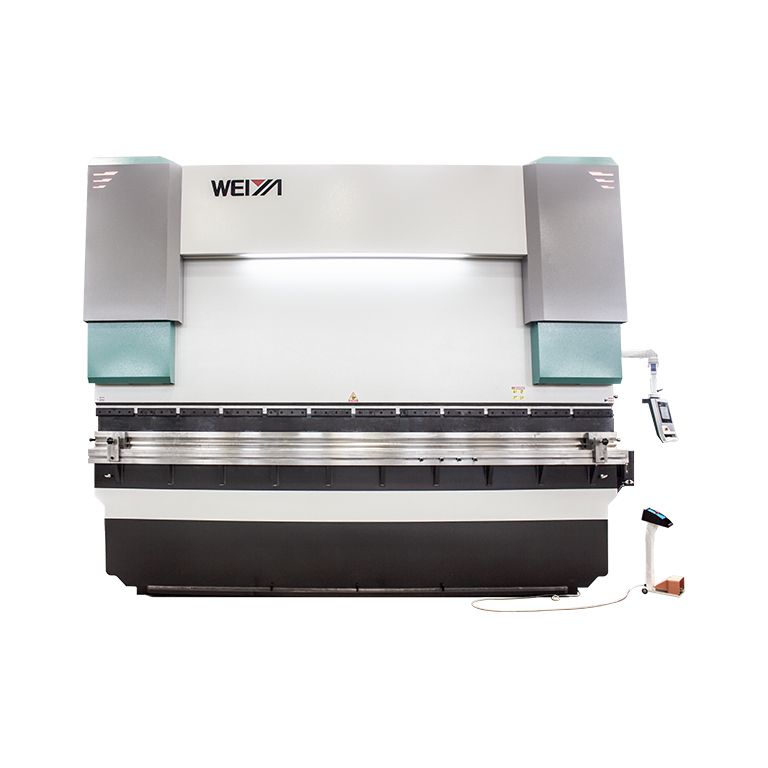
    2.3 Electro-Hydraulic Servo Pressbrakes

    Electro-hydraulic servo pressbrakes represent the most advanced type, combining hydraulic force with electric servo motors to control the slider’s position and speed. Unlike traditional hydraulic models, servo motors drive the hydraulic pumps only when needed, optimizing energy use and precision.

    •Advantages:

    ◦Exceptional precision (CNC-controlled, with bend angle accuracy up to ±0.1°).

    ◦Energy efficiency (uses 30–50% less energy than standard hydraulic pressbrakes).

    ◦Fast response time (adjusts force and speed in real time, ideal for complex, multi-bend parts).

    ◦Reduced maintenance (fewer hydraulic components, lower risk of leaks).

    •Limitations:

    ◦Higher initial cost (justified by long-term efficiency and precision gains).

    ◦Requires skilled operators to program CNC systems for complex parts.

    •Applications: High-precision manufacturing (e.g., aerospace components, medical devices, automotive body panels, stainless steel kitchenware).
    pressbrake-the-backbone-of-metal-bending-in-modern-manufacturing-3.webp


    3. Key Components of a Pressbrake: Building Blocks of Precision

    A pressbrake’s performance depends on the quality and integration of its core components, each playing a critical role in ensuring accurate, consistent bending:

    3.1 Slider (Upper Beam)

    The slider is the moving component that applies pressure to the workpiece. It must be rigid (to avoid deflection under force) and precisely aligned with the lower die. In advanced models, sliders include crowning systems—mechanical or hydraulic adjustments that compensate for slider deflection when bending long sheets, ensuring uniform pressure across the entire workpiece width.

    3.2 Worktable (Lower Beam)

    The fixed worktable supports the die and workpiece. It often features T-slots for securing dies and guides for aligning the metal sheet. For large workpieces, tables may be extended or equipped with roller conveyors to simplify material handling.

    3.3 Die System

    The die is the "tool" that shapes the metal. The most common type is the V-die, which determines the bend angle and radius based on its V-opening size (as covered in earlier discussions). Other die types include:

    •U-dies: For forming U-shaped parts (e.g., channels).

    •Radius dies: For creating smooth, large-radius bends (e.g., pipes or curved panels).

    •Acute-angle dies: For bends less than 90° (e.g., 45° brackets).

    3.4 Backgauge

    The backgauge is a critical component for precision. It positions the workpiece horizontally, ensuring the bend occurs at the correct distance from the sheet’s edge. Modern pressbrakes use CNC backgauges with multiple axes (X, Y, Z, R), allowing for automatic adjustment between bends and supporting complex part geometries.

    3.5 Control System

    The control system acts as the pressbrake’s "brain." Basic models use manual or semi-automatic controls, while advanced electro-hydraulic pressbrakes feature CNC controls (e.g., Delem, Cybelec) that enable:

    •Programming of complex bend sequences.

    •Real-time adjustment of force, speed, and angle.

    •Integration with CAD/CAM software (importing part designs directly for automated programming).


    4. How to Select the Right Pressbrake: Key Considerations

    Choosing the correct pressbrake requires matching the machine’s capabilities to the specific needs of your application. Below are the critical factors to evaluate:

    4.1 Material Characteristics

    •Thickness and Type: Thicker, high-strength metals (e.g., 15mm high-strength steel) require a pressbrake with higher force capacity (e.g., 200+ tons). Soft metals (e.g., aluminum) can use lower-force models but may need specialized dies to prevent scratching.

    •Width: The pressbrake’s bed length must match or exceed the maximum width of the workpiece. For example, a 3-meter sheet requires a pressbrake with a 3-meter or longer table.

    4.2 Bend Requirements

    •Precision: If parts require tight angle tolerances (e.g., ±0.5° for aerospace components), an electro-hydraulic servo pressbrake with CNC controls is essential. For less critical parts (e.g., structural brackets), a hydraulic or mechanical model may suffice.

    •Complexity: Parts with multiple bends (e.g., electrical enclosures) need a pressbrake with a multi-axis backgauge and CNC programming capabilities to automate the bending sequence.

    4.3 Production Volume

    •High-Volume: Mechanical pressbrakes (fast cycling) or automated electro-hydraulic models (with robotic load/unload systems) are ideal for mass production.

    •Low-Volume/Custom: Electro-hydraulic pressbrakes with easy programming are better for frequent part changes and small batches.

    4.4 Budget and Total Cost of Ownership (TCO)

    •Initial Cost: Mechanical pressbrakes are the most affordable, followed by hydraulic, then electro-hydraulic.

    •Long-Term Costs: Consider energy use (electro-hydraulic models are more efficient), maintenance (mechanical models need more upkeep), and labor (CNC systems reduce operator time).


    5. Safety Protocols for Pressbrake Operation

    Pressbrakes pose significant safety risks (e.g., crush injuries, mechanical failures) if not operated properly. Adhering to strict safety guidelines is critical to protecting operators and equipment:

    5.1 Safety Equipment

    •Guards: Install physical guards around the die and slider area to prevent accidental contact. Interlocked guards stop the machine if opened during operation.

    •Light Curtains: Use photoelectric light curtains that block the slider’s movement if an operator’s hand or body enters the danger zone.

    •Foot Pedals: Equip the machine with dual foot pedals (requiring both feet to activate) to prevent accidental triggering.

    5.2 Operator Training

    •Train operators on machine-specific controls, emergency stop procedures, and risk awareness.

    •Ensure operators understand how to select the correct die and adjust force/speed to avoid material failure or machine damage.

    5.3 Maintenance and Inspection

    •Conduct daily checks: Inspect hydraulic hoses for leaks, verify guard functionality, and test emergency stops.

    •Perform regular maintenance: Lubricate moving parts, replace worn components (e.g., die edges), and calibrate the backgauge and control system.


    6. Pressbrake Applications Across Industries

    The pressbrake’s versatility makes it a staple in numerous industries, each leveraging its capabilities to meet unique manufacturing needs:

    6.1 Automotive

    •Applications: Bending steel/aluminum for car bodies, chassis components, exhaust systems, and door frames.

    •Requirements: High-volume production (mechanical or automated electro-hydraulic pressbrakes) and precision (to ensure part fitment).

    6.2 Aerospace

    •Applications: Forming titanium and aluminum alloys for aircraft wings, fuselage panels, and engine components.

    •Requirements: Extreme precision (electro-hydraulic servo pressbrakes) and compatibility with high-strength metals.

    6.3 Construction

    •Applications: Bending structural steel for beams, columns, and scaffolding; forming sheet metal for roofing and cladding.

    •Requirements: High force capacity (hydraulic pressbrakes) to handle thick steel plates.

    6.4 Medical Device Manufacturing

    •Applications: Shaping stainless steel for surgical tools, MRI machine enclosures, and implant components.

    •Requirements: Ultra-precision (CNC electro-hydraulic pressbrakes) and clean operation (to avoid material contamination).

    6.5 Consumer Goods

    •Applications: Bending aluminum for laptop casings, stainless steel for kitchen appliances, and sheet metal for furniture frames.

    •Requirements: Flexibility (to handle small batches of diverse parts) and surface protection (to prevent scratches on visible components).


    References
    Press Brake: The Unsung Hero Behind Metal Bending – Everything You Need to Know Pressbrake: The Backbone of Metal Bending in Modern Manufacturing WST Sheet & Tube Laser Cutter Features CNC Machine Tool Operating Procedures: Before, During, and After Operation Safety controllers WS Open Laser Cutter Technical Parameters WSE Enclosed Laser Cutter Technical Parameters WST Sheet & Tube Laser Cutter Technical Parameters WPT Profile Tube Laser Cutter Technical Parameters WW Laser Welding Machine Technical Parameters Canton Fair Showcases WEIYA's Strength in Expanding into Global Markets Mexican Clients Inspect and Approve Via Equipment Integrated solutions General Features WEIYA Customers Controller System Max Fiber Laser Laser Head Machine Design Exchange Platform Water Chiller Home Press Brake Smart CNC Press Brake 3-4 Axis WS Open Laser Cutter Swing Beam Shear Company Profile Over 20 Years of Experience and Custom Engineering What is a press brake and what is it used for? What are the main types of press brakes? How do I know how much tonnage I need? What should I consider before purchasing a press brake? Can I customize a press brake for my workshop? What are your payment terms? About WEIYA Elite CNC Press Brake 4-6 Axis Features Genius Press Brake 6-8 Aixs Features EP Full Electric Press Brake Features Gaint Press Brake Features Tandem Press Brake Features CNC Control System Smart CNC Press Brake 3-4 Axis Technical Specifications CNC System CNC Press Brake Knowledge ESA S630 2D Graphical CNC System Precision Excellence Best Service Provide by WEIYA Personalized One-on-One Consultation 600T6000MM WEIYA CNC Press Brake DA69T System Sheet Follower Tailored Precision Bending Solutions Press Brake 2-Axis CNC BackGauge With X, R-Axis Laser Cutting Gases: Types, Selection, Applications, and Safety Active Angle Control: Precision Angle Achievement Laser Safety System: Workplace Safety Enhancement Italy DSP Laser Protection Modular SIL 3 Wireless Foot Pedal Solution Overview Deflection-Free Precision with Crowning System WEIYA Manual Crowning Optimal Large Sheet Support for Bending Sheet Supports Systems Fast Clamping for Frequent Punch Changes Manual Upper Tool Fast Clamping WILA Smart Tooling App: Press Brake Tool Mgmt Smart Tooling App WEIYAMotorized Sheet Followers for Bending Front Sheet Follower Supports System Innovative Tools for Enhanced Productivity Tooling And Tool Storage Solutions DELEM Tools for Press Brake Productivity Features Smart Factory Tools for Industry 4.0 Access Additional Control Panel (ACP) WEIYA: Eco-Friendly Precision Equipment Advantages Setting the Standard: Precision Cutting with the WEIYA Shearing Machine Guillotine Shear Video WPT Profile Tube Laser Cutter Features WST Sheet & Tube Laser Cutter Component WW Laser Welding Machine Features Swing Beam Shear Features Structure Structure High-Precision Cutting What materials can a laser cutting machine cut? Advanced technology and high performance What is the working principle of a shearing machine? Optical protection Strength in Action | WEIYA and Brazilian Clients Collaborate to Forge a New Chapter Productivity WEIYA-Supplier's Associate Company Cutting Head Servo Motor Laser Head Cutting Head Laser Head Shearing Machine Elite CNC Press Brake 4-6 Axis WSE Enclosed Laser Cutter Guillotine Shear Company News Proven Performance with 5,000+ Installations Smart CNC Press Brake 3-4 Axis Features Elite CNC Press Brake 4-6 Axis Video Genius Press Brake 6-8 Aixs Video EP Full Electric Press Brake Component Tandem Press Brake Component What is your warranty policy for press brakes? Back Gauge Modification Fast Clamping Knowledge Laser Cutting Machine Knowledge Corporate Culture Customized CNC Solutions for Your Press Brake Needs ESA S640 2D Graphical CNC System Innovation Leadership Fast Production & On-Time Delivery WEIYA MasterBend DA69T Press Brake Machine 8+1 Axis Sheet Feeding System WEIYA Press Brake Back Gauge Modification Why WEIYA Laser Cutting Machines Are Transforming Metal Fabrication Worldwide? Press Brake 4-Axis CNC BackGauge With X, R, Z1, Z2-Axis WEIYA Bending Angle Measurement WEIYA Safety Protection MCS + DSP AP WEIYA CHOOSE AND CONFIGURE YOUR PRESS BRAKE Wireless Foot Pedal WEIYA High Precision & Adaptive Crowning System Press Brake CNC Crowning WEIYA Sheet Support WEIYA Customized Solutions to Increase Your Press Brake Productivity Wilson Pneumatic Clamping WEIYA WILA Smart Tooling Smart Clamping System With Bluetooth WEIYA Bending Follower Supports Bending Follower Features WEIYA Tooling And Tool Storage Solutions Tool Storage System: Press Brake Storage, Loading & Unloading WEIYA Bending Offline Software Profile T3D Offline Programming WEIYA Industry 4.0 With IOT Productiv ACP Features WEIYA Hybrid Servo ECO Function Hybrid ECO System Why Choose WEIYA Smart CNC Press Brake 3-4 Axis for Your Metal Fabrication Needs? WPT Profile Tube Laser Cutter Component WW Laser Welding Machine Component Siemens Motor Swing Beam Shear Specifications SIEMENS Motor Diverse Material Compatibility How high is the cutting accuracy of a laser cutting machine? Customized Solutions What materials can a shearing machine cut? WEIYA CNC Machine Category Optical imaging Resemblance Why Customers Choose WEIYA? Mr. Joon Visited WEIYA The Servo Motor and Reduce Guideway Aluminum Column Beam Controller System Laser Source Swing Beam Shear Video Products Laser Cutting Machine Genius Press Brake 6-8 Aixs Production Base 20 Sustainable Technology Leadership Genius Press Brake 6-8 Aixs Component Can you send an engineer to install the machine or provide on-site training? Bending Angle Measurement Standard Tooling WST Sheet & Tube Laser Cutter Shearing Machine & Punching Machine Basics ESA S650W 2D/3D Graphical CNC System Customer Success Long-Term Warranty & Lifetime Support How to Install the Laser Cutting Machine? Automatic angle detector and correction Flexible CNC Control Options for Every User Press Brake 4-Axis CNC BackGauge With X, R, Z1, Z2-Axis Iris Plus Angle Measurement System Optical Safety System - Advanced Wireless Remote Module (WRM) Wila Tool Holders And Crowning System Wila Hydraulic Clamping System Smart Tooling Concept Provide Valuable Practical Assistance Tool Station Importing and unfolding of 3D parts in IGES, STEP, SAT and X_T (Parasolid) formats. Products In Time Hydraulic vs. Hybrid Rexroth Valve Rexroth Valve High Efficiency and High Speed How fast is the cutting speed of a laser cutting machine? Excellent After-Sales Service What is the cutting accuracy of a shearing machine? Technical Specifications Mounting brackets Compatibility Technical Data WEIYA Press Brake Productivity Tool Station Customer Visiting Video Show Cases Pneumatic Chuck Gear Rack Control System Automatic Plate Exchange Wire Feeder Solutions EP Full Electric Press Brake Qualifications and Honors Smart CNC Press Brake 3-4 Axis Component 600 Elite CNC Press Brake 4-6 Axis Component Premium Components from Trusted Brands Safety Arrangements CNC Automatic Crowning System WPT Profile Tube Laser Cutter How to Use a CNC Machine Tools Properly ESA S860W 3D Graphical CNC System Integrity Foundation Global On-Site Engineer Support WYPB-300T6000 CNC Press Brake Machine Industry 4.0 & Robotics Laser Angle Correction Press Brake 5-Axis CNC BackGauge With X, R, Z1, Z2, Delta X2-Axis Laser Check Angle Measurement System Perfect Combination of High Quality-Performance-Efficiency Also Supplied and Connected to the WRM Are Profile T3D Machine Modes In Time ePrAX® Hybrid Servo System WS Open Laser Cutter Features WSE Enclosed Laser Cutter Features Swing Beam Shear Component Workbench Spring Pressing Cylinder Automation and Intelligent Control What is the working principle of a laser cutting machine? Strict Quality Control How do I choose the right shearing machine model? Punch Presses vs. Press Machines: Principles, Classification, and Applications in Modern Manufacturing Three Core Metal Processing Tools: Bending, Shearing, and Laser Cutting Machines Networking Water Chiller Controller System Water Chiller Fixture Design Control Panel Giant Press Brake 60 Fast, Dependable After-Sales Support Wireless Foot Pedal Electric Cabinet WW Laser Welding Machine Cases End-to-End Industry Solutions Test for Y and Backguage Accuracy Press Brake 6-Axis CNC BackGauge With X1, X2, R1, R2, Z1, Z2-Axis Circuit Diagram E-Paper Display Stokes And Started In Time Hybrid Servo ECO Function WS Open Laser Cutter Component WSE Enclosed Laser Cutter Component Safety Guard Guillotine Shear Features Motorized Blade Clearance adjustment Strong After-Sales Service Support Are the maintenance requirements of a laser cutting machine high? High Cost-Effectiveness and Low Long-Term Costs What is the maintenance and servicing frequency for a shearing machine? Water Chiller Segmented Automatic Support Installation Control Cabinet About Us Tandem Press Brake 12000 Crowning System Punch Press Machine & Press Machine Knowledge Quick Start Training Programs Video of Factory Brackets Machine Module (MM) And Ultrasonic Module (UM) Messages In Time Time Cycle Comparison Blade Clearance Adjustment Guillotine Shear Specifications Ball Screw & Linear Guide Is a laser cutting machine difficult to operate? What is the power consumption of a shearing machine? Water Chiller Contact Us Global Market Presence Sheet Support About Tooling 80 WEIYA WYPB 300T6000 Press Brake Automatic Brackets Advantage Ultrasonic Sensors Pedal Switch Guillotine Shear Component Pedal Switch Is a laser cutting machine suitable for mass production? Do you offer customization services for shearing machines? DA-50 series Why Choose WEIYA Press Brake? How To Choose Press Brake? International Quality Standards Tooling Clamping System Services 135T3200 CNC Press Brake Machine with DE66T system Bend Speed Management (BSM) What is the return on investment for a laser cutting machine? What is the delivery time for a shearing machine? DELEM DA66T Touch 2D Modular Press Prake Control Project implementation guarantee Software PDF Download Economical NC Type Press Brake Machine Automatic Tool Alignment Why Choose WEIYA for Laser Cutting Machine? WEIYA CNC Control System DELEM DA69T Touch 3D Modular Press Brake Control High efficiency after sales service Wila Smart Tooling Video WEIYA 40T1300 Fully Electric Press Brake Machine Certification And Standards Compliance How to choose Laser Cutting Machine? Search Result Bending Follower Supports White&Blue CNC Press Brake with DSP Laser Protection Press Brake Control Safety System - Advanced Why choose Weiya? Search Result Product Tooling And Tool Storage Solutions CNC VS NC Press Brake Machine How to choose Shearing Machine? Search Result Other 170T3200 CNC CT12 Press Brake Machine Sitemap 500T 5M Big Size Press Brake Machine Industry 4.0 With IOT Productivity 404 WEIYA WYP67K Series 130-ton 4000mm CNC Press Brake Hybrid Servo ECO Function Privacy Policy Introducing Our Latest CNC Press Brake Machine with DELEM DA53T System | 4+1 Axis Submission Successful! WEIYA 170T4000 CNC Press Brake Machine DA53T 130T2500 NC Press Brake Taggg WEIYA 3 Rolls Plate Rolling Machine WEIYA CNC V Grooving Cutting Machine WEIYA NC Press Brake Machine TP10S WEIYA Swim Beam Shearing Machine with E21 System About WEIYA/Who We are? WEIYA Guillotine Shearing Machine WEIYA Electro-hydro CNC Press Brake About Weiya New Website Company Introduction New Website Company Introduction 1 Elite CNC Press Brake 4-6 Axis Video Genius Press Brake 6-8 Aixs Guillotine Shear
    Related CNC Products
    Press Brake: The Unsung Hero Behind Metal Bending – Everything You Need to Know
    27
    Oct
    2025
    Press Brake: The Unsung Hero Behind Metal Bending – Everything You Need to Know
    Have you ever wondered how a flat sheet of metal transforms into the curved edges of a car door, the sharp angles of a kitchen cabinet, or the precise brackets holding your smartphone? Chances are, a ...
    Read More >
    Setting the Standard: Precision Cutting with the WEIYA Shearing Machine
    05
    Nov
    2025
    Setting the Standard: Precision Cutting with the WEIYA Shearing Machine
    In the demanding field of metal fabrication, the quality of the final product is a direct result of the accuracy achieved at the very first step. That step is cutting, and the shearing machine is the ...
    Read More >
    Punch Presses vs. Press Machines: Principles, Classification, and Applications in Modern Manufacturing
    01
    Dec
    2025
    Punch Presses vs. Press Machines: Principles, Classification, and Applications in Modern Manufacturing
    In modern manufacturing, punch press machines and press machines are core equipment for metal sheet processing and parts forming, widely used in automotive, home appliance, electronics, and aerospace ...
    Read More >
    Room 1306, Building 2, Ziyuan Mansion, Huashan District, Ma'anshan City, Anhui Province
    GET THE BEST PRICE FROM WEIYA TODAY, VERY WELCOME YOUR ENQUIRER AT ANY TIME
    Talk to Us
    Room 1306, Building 2, Ziyuan Mansion, Huashan District, Ma'anshan City, Anhui Province
    info@weiyamt.com +86-13866428690
    We use cookies on this site, including third party cookies, to delivery experiennce for you.
    Accept Cookies
    Read Privacy Policy