Metal bending underpins products in sectors from automotive and aerospace to construction and architecture by creating precise angles, flanges, and profiles from flat stock. As expectations for accuracy, speed, and repeatability rise, fabricators must understand both traditional and advanced bending methods to choose the most suitable approach for each job. Combining sound process selection with modern equipment can significantly improve quality, reduce scrap, and streamline production.
Understanding Metal Bending
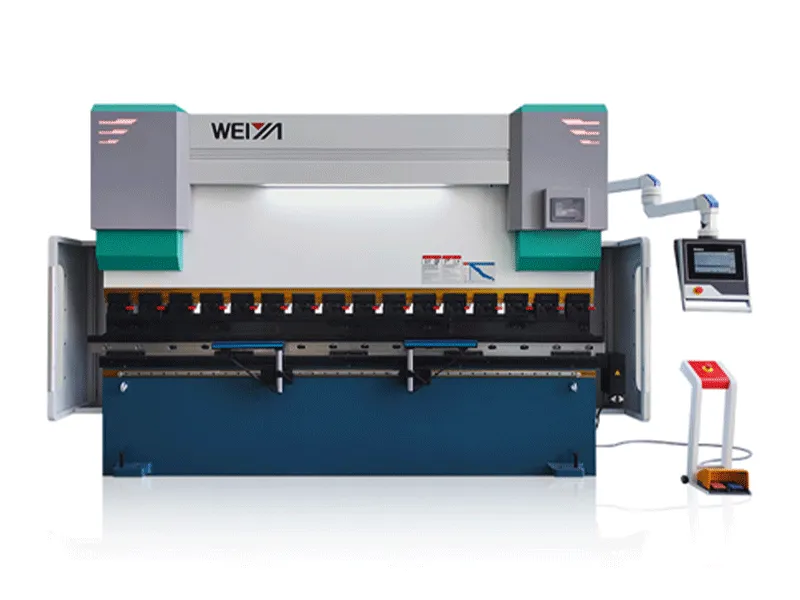
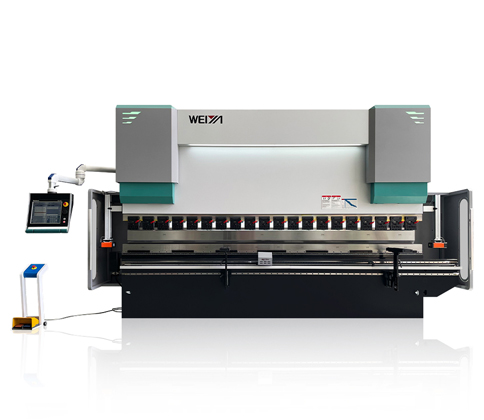
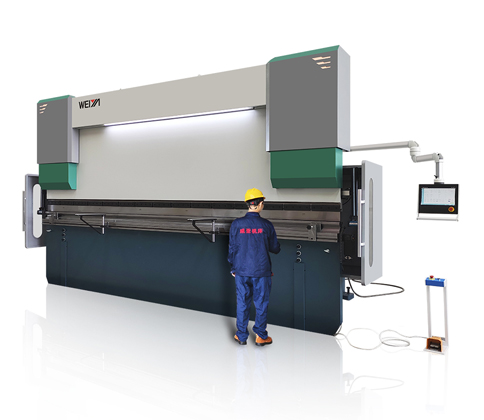
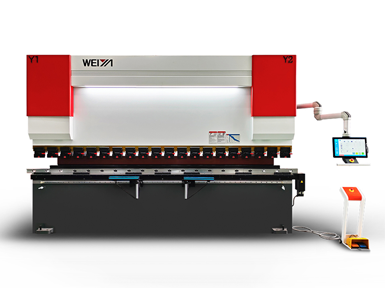
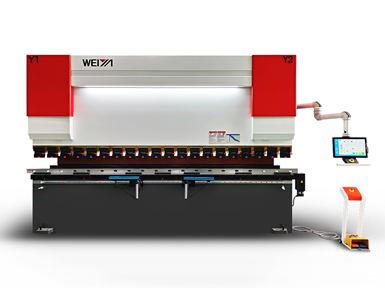
Metal bending is the controlled deformation of metal to a required angle or shape using force, tooling, and appropriate support. In press brake work, a punch forces the sheet into or toward a die, creating bends while keeping material within its elastic and plastic limits. CNC press brakes add programmable control of ram position, force, and back gauge, giving high accuracy and repeatability over many parts. When integrated into Industry 4.0 environments, these machines can exchange data, report status, and support predictive maintenance through IoT connectivity.
Common Bending Techniques and Uses
Several primary methods are widely used in sheet metal work, each with distinct characteristics.
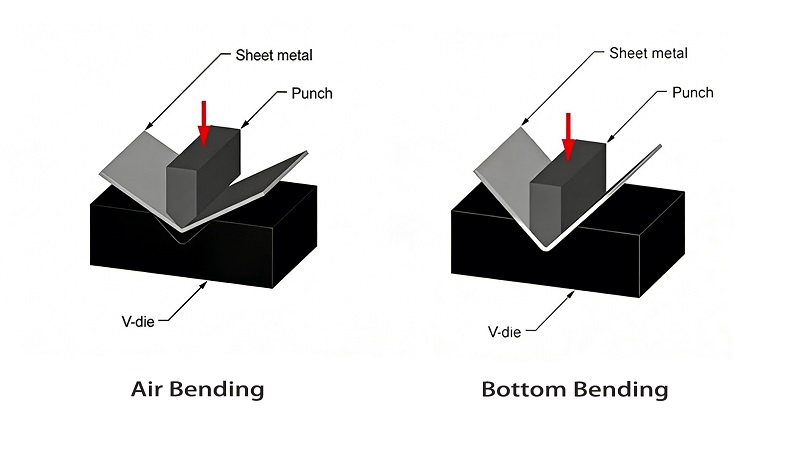
Air bending uses a punch and V die while leaving a gap between the sheet and the bottom of the die. The bend angle is controlled by punch penetration, requiring relatively low force and allowing one tool set to produce multiple angles, which makes air bending the most common and flexible technique for general fabrication. Bottom bending (bottoming) forces the material firmly against the sides and bottom of the V die so the bend angle is largely defined by die geometry; this increases angle accuracy and reduces springback, making it suitable where tighter tolerances are needed. Coining uses very high tonnage to press the sheet tightly between punch and die so the metal conforms exactly to their shape, greatly minimizing springback and achieving extremely accurate bends at the cost of higher tool loads, more specialized tooling, and higher energy requirements.
Key Factors in Choosing a Bending Method
The best technique for any job depends on several interrelated factors.
Material type and properties affect springback, required tonnage, and risk of cracking, so softer metals may be air bent easily while high strength alloys sometimes benefit from bottoming or coining to control final angle. Thickness and length of the bend influence tonnage and tooling selection; thicker or longer parts may need more robust processes and press capacity. Production volume and tolerance requirements also matter: high volume, tight tolerance work often justifies CNC press brakes and more precise methods such as bottoming or selective coining, while low volume or varied jobs may favor flexible air bending. Finally, cost and throughput pressures push many shops toward techniques and tool setups that balance initial investment against scrap rates, tool wear, and changeover time.
Precision Bending with Advanced Techniques
For many modern operations, CNC press brake bending with air bending or bottoming is effectively the “best” technique because it combines precision, flexibility, and efficiency. CNC controllers allow operators to program bend angles, positions, and sequences so the machine executes each bend to specification with minimal manual adjustment. Advanced systems can control multiple axes—including ram position, back gauge, and side supports—enabling complex multi-bend parts with consistent angles and dimensions. Automatic crowning features compensate for deflection in the bed or ram, improving angle consistency along the entire bend length, especially on long parts. These capabilities reduce scrap, cut setup time, and lower the total cost per part while maintaining tight tolerances.
Innovations and Future Trends
Industry 4.0 is reshaping metal bending by connecting press brakes and other equipment into smart manufacturing networks via IoT platforms. Sensors on bending machines track parameters such as pressure, temperature, cycle counts, and vibration, feeding data to cloud systems for real time monitoring and predictive maintenance. This connectivity enables optimized scheduling, automatic program selection, and analysis of performance trends, which helps eliminate bottlenecks and reduce downtime. As automation and AI driven analytics advance, shops that pair appropriate bending techniques—often CNC air bending or bottoming—with smart, connected machinery are best positioned to achieve high productivity, quality, and sustainability.