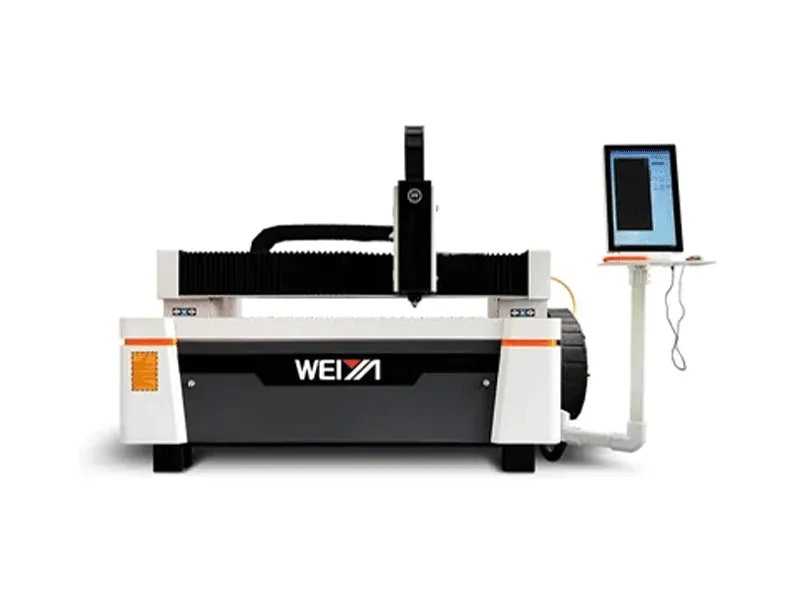
For stainless steel fabrication, laser cutting generally delivers better precision and cleaner edges than plasma cutting, while plasma remains a practical option for very thick plate and lower equipment investment. This guide compares the two processes in terms of cut quality, speed, thickness capability, precision, and operating cost so you can choose the most suitable method for your stainless steel project—or the right WEIYA laser cutting machine for the job.
Laser Cutting vs Plasma Cutting for Stainless Steel
Laser cutting uses a concentrated beam of light, while plasma cutting uses a jet of ionized gas to cut conductive metals such as stainless steel. In most stainless steel applications up to medium thickness, fiber laser cutting offers stronger accuracy, better edge quality, and greater flexibility than plasma cutting.
Plasma cutting still has value when the material is very thick, the tolerance requirements are less strict, and the priority is lower upfront equipment cost rather than fine surface quality. As higher-power fiber lasers continue to improve, more heavy-plate work is shifting from plasma to laser in many fabrication shops.
To decide which process is better for your application, it is important to compare cut quality, speed, thickness capability, precision, and operating cost instead of focusing only on purchase price. WEIYA's fiber laser cutting machines are built to take advantage of these strengths for stainless steel fabrication.
How Laser and Plasma Cutting Differ in Cut Quality
Cut quality refers to edge smoothness, dross, taper, and the size of the heat-affected zone on the cut stainless steel edge. Fiber laser cutting typically produces very narrow kerfs and tight tolerances, which allows crisp contours and fine details.
Plasma cutting usually creates a wider cut path and more taper, which may be acceptable for structural parts but is less suitable for parts that need clean appearance or accurate fit. Laser cutting also produces a smaller heat-affected zone, so the edge is usually cleaner, harder, and less discolored.
By contrast, plasma cutting tends to leave more dross and a larger heat-affected zone, which often means extra grinding or cleanup after cutting. While plasma can perform well on certain thicknesses, laser still has the advantage when consistency, internal detail, and complex stainless steel shapes are important.
For customers producing decorative or visible stainless parts, such as kitchen equipment, architectural panels, or consumer products, WEIYA laser systems help reduce or even eliminate edge rework.
Laser Cutting vs Plasma Cutting in Cutting Speed
Cutting speed refers to how quickly the machine moves through stainless steel and is a major factor in productivity and part cost. High-power fiber lasers can cut stainless steel faster than plasma for many common thickness ranges, especially as power levels increase.
For thin stainless sheet, fiber lasers can move very quickly and are especially effective for large production runs with nested flat parts. In earlier years, plasma was often considered the faster choice for thick plate, but modern high-power laser systems have changed that balance in many shops.
For very thick material, or when using lower-power laser systems, plasma can still be competitive in speed, especially if finish quality is not the top priority. In practical shop conditions, the speed advantage of laser cutting often means shorter production cycles, more output per shift, and faster return on investment.
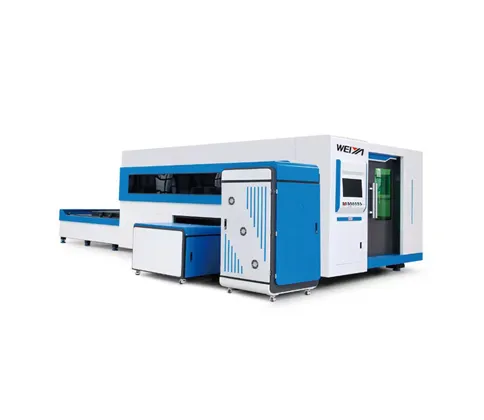
WEIYA high-power laser cutting machines are designed to support fast processing on thin and medium stainless steel while maintaining accuracy and repeatability.
Thickness and Precision in Stainless Steel Cutting
Thickness capability and precision describe how thick a material the process can cut effectively and how accurately it can hold dimensions. Fiber laser systems are commonly used for stainless steel in thin to moderate thickness ranges, and higher-power machines can handle thicker material while still maintaining strong accuracy.
Plasma cutters can process much thicker stainless steel, but the dimensional precision and edge quality are generally lower than laser. Laser cutting delivers a much narrower kerf and tighter tolerance, making it a better fit for precision stainless steel components.
Plasma is often used when a wider tolerance range is acceptable, such as for heavy brackets, base plates, or structural parts. For stainless sheet and moderate plate, laser systems cover most production needs and are especially effective when part detail and fit are important.
In terms of performance, plasma relies on high current and is better suited to heavy plate, while CNC fiber laser systems provide finer detail and better dimensional control.
Operating Costs of Laser and Plasma Cutting
Operating cost includes energy use, consumables, maintenance, labor, and other production expenses per part, but does not include the original machine purchase price. Plasma cutting systems generally cost less to buy, which makes them attractive for shops with limited capital.
However, laser systems often provide higher throughput, less finishing labor, and better nesting efficiency, which can reduce the total cost per finished stainless steel part over time. Plasma may have a lower direct cutting cost per meter, but it usually creates more dross and requires more grinding or cleanup.
Laser systems may use more expensive assist gases and have higher equipment costs, but their speed, automation potential, and clean-cut quality can reduce indirect expenses. In many real-world applications, laser cutting also cuts secondary finishing time significantly, which improves delivery speed and overall job economics.
WEIYA laser systems are designed to improve uptime and reduce maintenance-related interruptions, helping fabricators stabilize long-term cost per part.
When to Choose Laser Cutting for Stainless Steel Projects
Laser cutting is usually the preferred option when stainless steel parts require tight tolerances, intricate shapes, small holes, or attractive edge appearance. This is common in industries such as food equipment, elevators, enclosures, signage, and architectural fabrication.
It is also a strong choice when production volume is high enough that faster cutting and reduced finishing can offset the higher machine cost. Plasma remains a practical solution for thick stainless plate when edge quality requirements are moderate and budget constraints are more important.
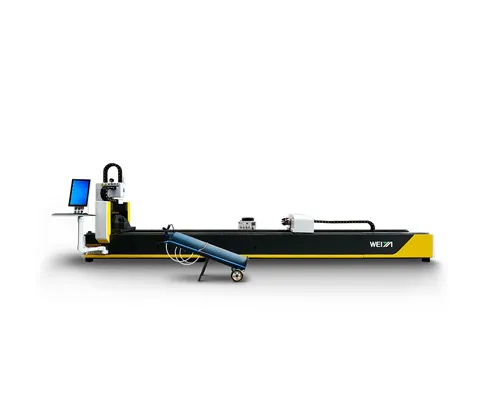
If your stainless steel products are mainly heavy plates, structural brackets, or base components where slight taper and some post-processing are acceptable, plasma can still be cost-effective. For shops working with both sheet and tube stainless parts, integrated laser systems from WEIYA offer a more flexible production platform.
How WEIYA Supports Stainless Steel Cutting
WEIYA is a manufacturer of CNC laser cutting machines designed for high-precision metal fabrication, including stainless steel processing. Its laser systems combine powerful fiber sources, automatic focus heads, and precise motion control to deliver stable cutting performance.
WEIYA also offers both sheet-only and sheet-and-tube configurations, helping fabricators reduce handling and consolidate equipment. With application experience in stainless steel processing, WEIYA can help optimize cutting parameters, assist gas selection, and nesting strategies to improve part quality and reduce waste.
For buyers comparing laser and plasma, WEIYA can provide sample cuts, cycle time estimates, and return-on-investment analysis based on your stainless steel product mix.
Conclusion
Laser cutting excels in precision, edge quality, and speed for most stainless steel applications, while plasma still has a role in very thick material and lower-tolerance work. The best choice depends on your required thickness, finish quality, accuracy, and production volume.
By matching your stainless steel requirements with WEIYA's fiber laser technology, you can choose a process that delivers the best balance of quality, cost, and lead time for your project.