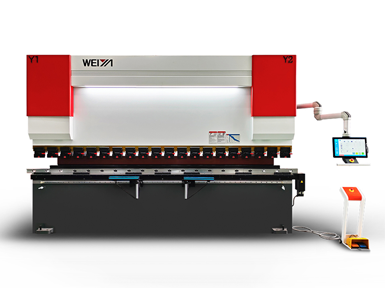
When comparing CNC cutting and laser cutting, the main difference lies in how material is removed. CNC cutting is a mechanical process that uses physical tools to shape material, while laser cutting relies on a concentrated beam of light to cut without direct contact. The best choice depends on material type, thickness, required precision, production speed, and overall cost.
CNC Cutting vs Laser Cutting: What's the Difference?
CNC cutting uses computer-controlled tools to physically remove material, while laser cutting uses a focused beam to melt or vaporize material along a programmed path. The key distinction is that CNC cutting requires direct contact between the tool and the workpiece, whereas laser cutting is a non-contact process.
Because of this, CNC cutting is better suited for thicker materials, three-dimensional shapes, and parts that require drilling or contouring. Laser cutting, on the other hand, is ideal for thin sheet materials, intricate patterns, and high-volume production where consistency matters. For manufacturers using WEIYA systems, choosing the right method can help reduce waste, minimize secondary finishing, and improve production efficiency.
How CNC Mechanical Cutting Works Compared to Laser Technology
CNC cutting operates by following programmed toolpaths created through CAD/CAM software. A rotating cutting tool removes material in the form of chips, and factors such as tool wear, cutting force, and workpiece clamping all affect the final result.
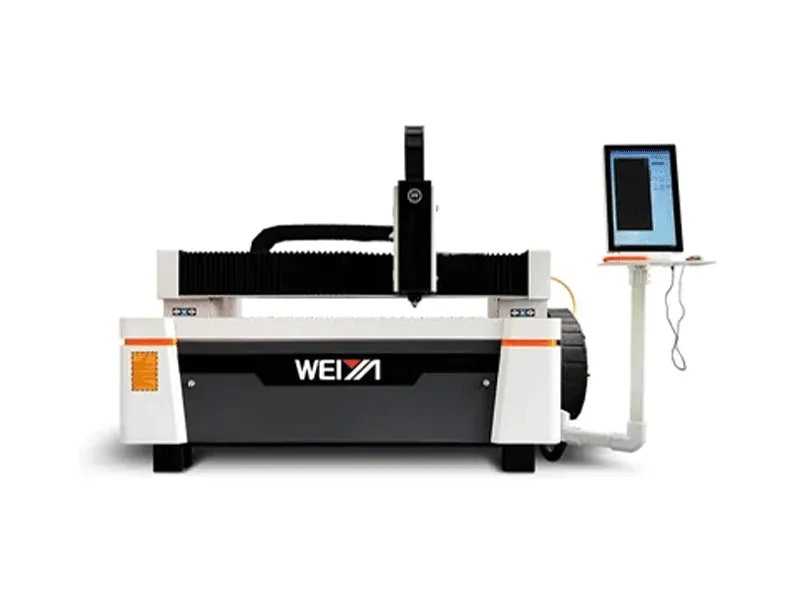
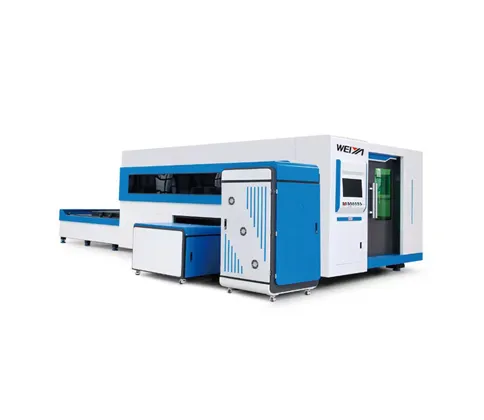
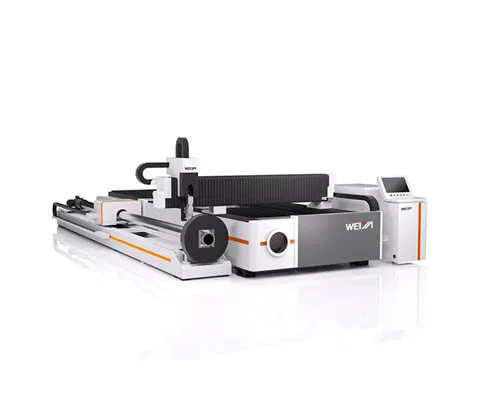
Laser cutting works differently by directing a high-energy beam along a defined path to separate material. Assist gases are often used to remove molten material and maintain a clean cut. Since there is no physical contact with the workpiece, laser cutting produces very little mechanical stress and offers excellent repeatability, especially for thin materials and detailed designs.
Precision in CNC Cutting and Laser Cutting
Precision refers to how closely the finished part matches the intended dimensions. Laser cutting typically achieves tighter tolerances on thin sheet materials because of its narrow beam and controlled cutting process. In many applications, it can deliver accuracy suitable for high-precision fabrication, although actual results depend on machine setup, material properties, and operating conditions.
CNC cutting is also capable of high accuracy, especially for parts that require depth control, pockets, or complex three-dimensional features. However, tool diameter, deflection, and fixturing stability can affect the precision of very fine details. As a result, both methods can produce excellent accuracy, but their performance depends on the application.
Speed Comparison Between CNC Cutting and Laser Cutting
Production speed includes setup time, cutting time, and any required post-processing. Laser cutting is usually faster for thin sheet metal and simple two-dimensional designs because it works quickly and requires little repositioning. This makes it highly efficient for batch production and repetitive jobs.
CNC cutting may perform better for thicker materials or parts with complex geometries that require multiple machining steps. In these situations, laser cutting may slow down or require multiple passes, which reduces its speed advantage. In the end, the faster option depends on the material and part design rather than the technology alone.
CNC vs Laser: Surface Finish and Part Quality
Surface finish includes edge quality, burr formation, and the need for additional processing. Laser cutting often produces smooth, clean edges on thin materials, which can reduce or even eliminate deburring. This makes it especially useful for visible components such as panels, enclosures, and decorative parts.
CNC cutting may leave rougher edges because of mechanical tool contact, but it remains a strong choice for thicker materials and parts that require complex shapes. In many cases, extra finishing is acceptable because CNC machining offers greater flexibility in geometry and material compatibility.
Best Use Cases for CNC Cutting and Laser Cutting
CNC cutting is usually the better choice for materials such as wood, plastics, foam, and thicker metal stock, especially when parts require three-dimensional machining, drilling, or contouring. It is also well suited for applications where depth and structural shaping are important.
Laser cutting is more effective for thin sheet metal, flat components, and designs that require fine details, sharp internal corners, or consistent repetition. It is widely used in applications where precision and speed are critical, especially in high-volume production environments.
The final choice depends on part geometry, material thickness, and finishing requirements.
Cost Comparison Between CNC Cutting and Laser Cutting
Cost considerations include equipment investment, setup time, labor, tooling, material waste, and post-processing. Laser cutting systems usually require a higher initial investment, but they can reduce labor and finishing costs for thin sheet applications because of their speed and clean cut quality.
CNC cutting can be more economical for thicker materials and complex parts that would otherwise require multiple laser operations or specialized equipment. The most cost-effective option depends on total production cost rather than machine price alone. Machine utilization, tooling wear, gas consumption, and scrap rate all affect overall efficiency.
Why Customers Choose WEIYA
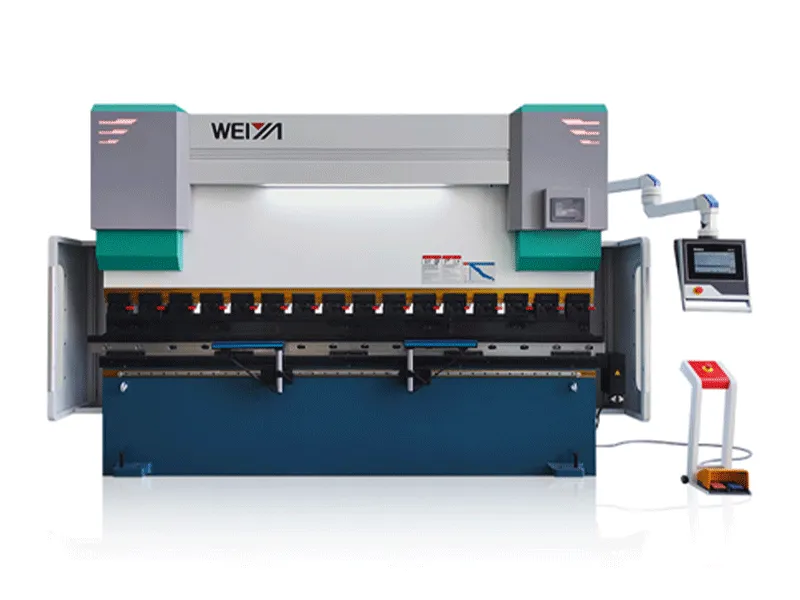
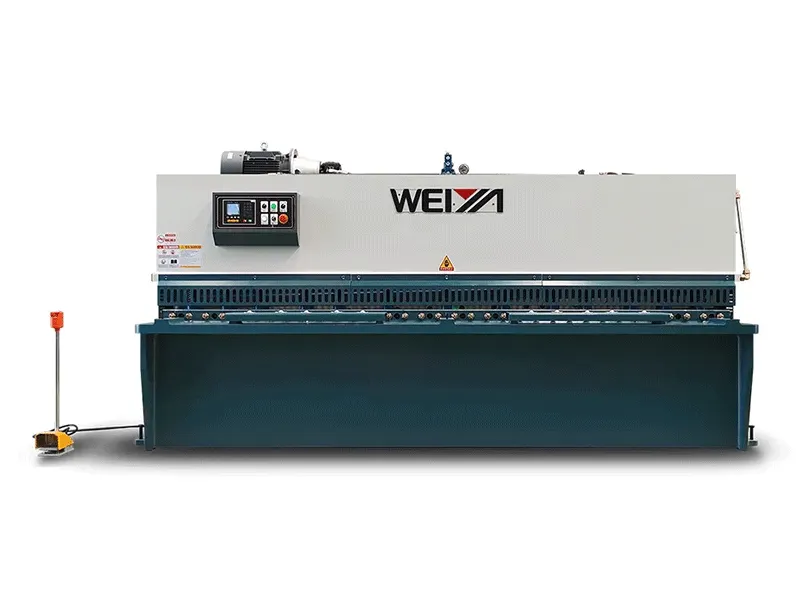
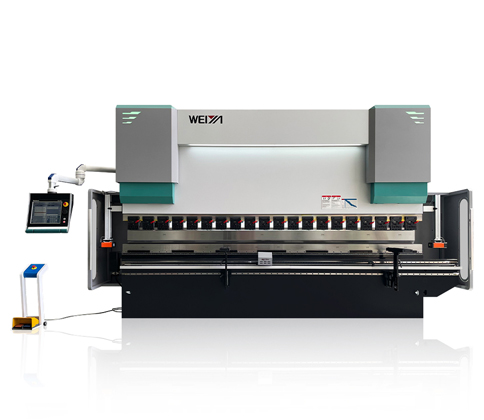
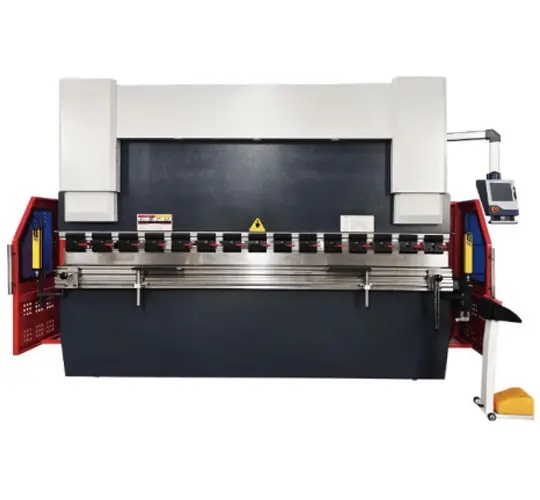
WEIYA has extensive experience in sheet metal machinery and provides a wide range of equipment, including CNC press brakes, shearing machines, fiber laser cutting systems, rolling machines, punching machines, hydraulic presses, and V-grooving machines. This broad capability allows manufacturers to integrate multiple processes into one production workflow.
By working with WEIYA, customers can evaluate whether CNC cutting, laser cutting, or a combination of both is the most effective solution for their application. This integrated approach helps improve efficiency, maintain consistent quality, and reduce overall production costs.
Conclusion
CNC cutting and laser cutting are both essential manufacturing technologies, each suited to different types of applications. CNC cutting is the preferred choice for thicker materials and complex three-dimensional machining, while laser cutting offers speed, precision, and clean results for thin sheet processing.